How Do Wind-Driven Rain and Storm Damage Affect Slate Roofs Over Time?
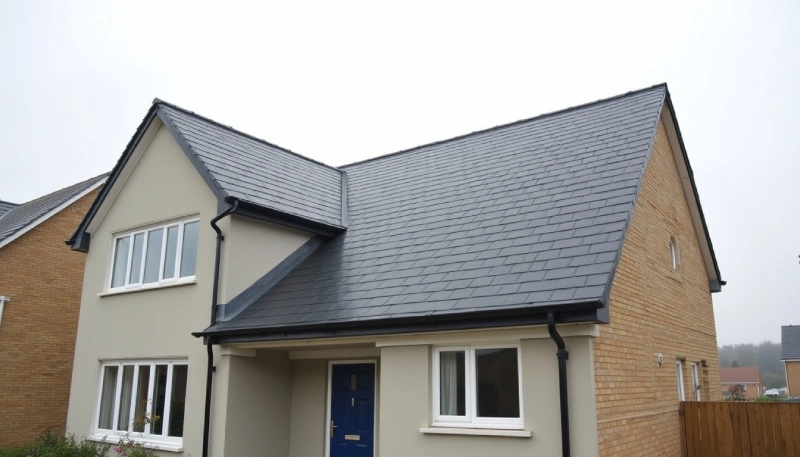
Slate roofs are built to last, but persistent wind-driven rain and repeated storms can gradually expose weaknesses that are difficult to spot from the ground.

Why you can trust our content
We understand that the roofing industry can be confusing, with plenty of outdated or misleading information. That’s why we rely only on trusted, proven sources to guide our advice and installations:






At a glance
Introduction
Slate roofs can withstand decades of British weather, but even a well-built roof is not completely immune to persistent rain, strong winds and repeated storms. In coastal areas such as Worthing, exposure to wind-driven rain can be particularly demanding because moisture may reach parts of the roof that would normally remain relatively well protected.
The difficulty is that storm damage is not always obvious from ground level. A slate may shift slightly, a fixing can weaken, or a flashing joint may start allowing water underneath. The roof may still look acceptable while small defects gradually become larger problems.
Understanding how weather affects slate roofing can help homeowners recognise early warning signs and arrange appropriate repairs before a minor issue develops into extensive internal water damage.
Why Is Wind-Driven Rain Harder on a Slate Roof?
Ordinary rainfall generally falls downwards, allowing the overlapping slates and roof pitch to direct water towards the gutters. Wind changes how that water behaves.
During severe weather, rain can be pushed sideways and upwards against the roof surface. Strong gusts can also disturb slates, particularly where existing fixings have weakened with age.
Wind-driven rain can enter through:
- Small gaps between damaged or displaced slates
- Weak points around roof penetrations
- Deteriorated flashing
- Failed mortar or pointing
- Areas where previous repairs have deteriorated
- Damaged underlay beneath the slate covering
Once moisture gets beyond the outer layer, it can travel along timber or roofing materials before appearing as a stain inside the property. This means the visible location of a leak is not necessarily directly below the original defect.
For homeowners concerned about a weather-related problem.
What Happens to Slate Roofs During Repeated Storms?
A single storm does not necessarily cause serious damage. The bigger concern is cumulative wear.
Repeated exposure to strong winds can place stress on slate fixings. Individual slates may become loose or cracked, while older nails and other fixing systems can gradually deteriorate. Once one slate has moved, neighbouring areas can become more vulnerable because the overlapping arrangement of the roof covering has been disrupted.
Heavy rain can then exploit these weaknesses.
Over several winters, this cycle can turn a small defect into a recurring leak. A repair that appears successful during dry weather may reveal further weaknesses when the next period of prolonged rain arrives.
Common effects of storm exposure
|
Weather-related issue |
What can happen |
Potential consequence |
|
Loose slate |
Slate moves or lifts in strong winds |
Water can reach the roof structure |
|
Cracked slate |
A fracture allows moisture through |
Localised damp or leakage |
|
Failed fixing |
Slate is no longer held securely |
Further movement during storms |
|
Damaged flashing |
Junctions become exposed |
Water enters around chimneys or roof edges |
|
Deteriorated underlay |
Secondary protection becomes less effective |
Moisture reaches timbers |
|
Blocked or overwhelmed gutters |
Water cannot drain efficiently |
Overflow and additional moisture exposure |
The important point is that weather damage is often interconnected. Fixing one visible slate may not address the underlying reason why that slate failed.
Which Signs Suggest a Slate Roof Has Been Affected by Storms?
Some warning signs can be identified without climbing onto the roof. Looking from a safe position, homeowners may notice:
- Slates that appear uneven or out of alignment
- Missing sections of slate
- Cracked or broken slates
- Small pieces of slate around the property
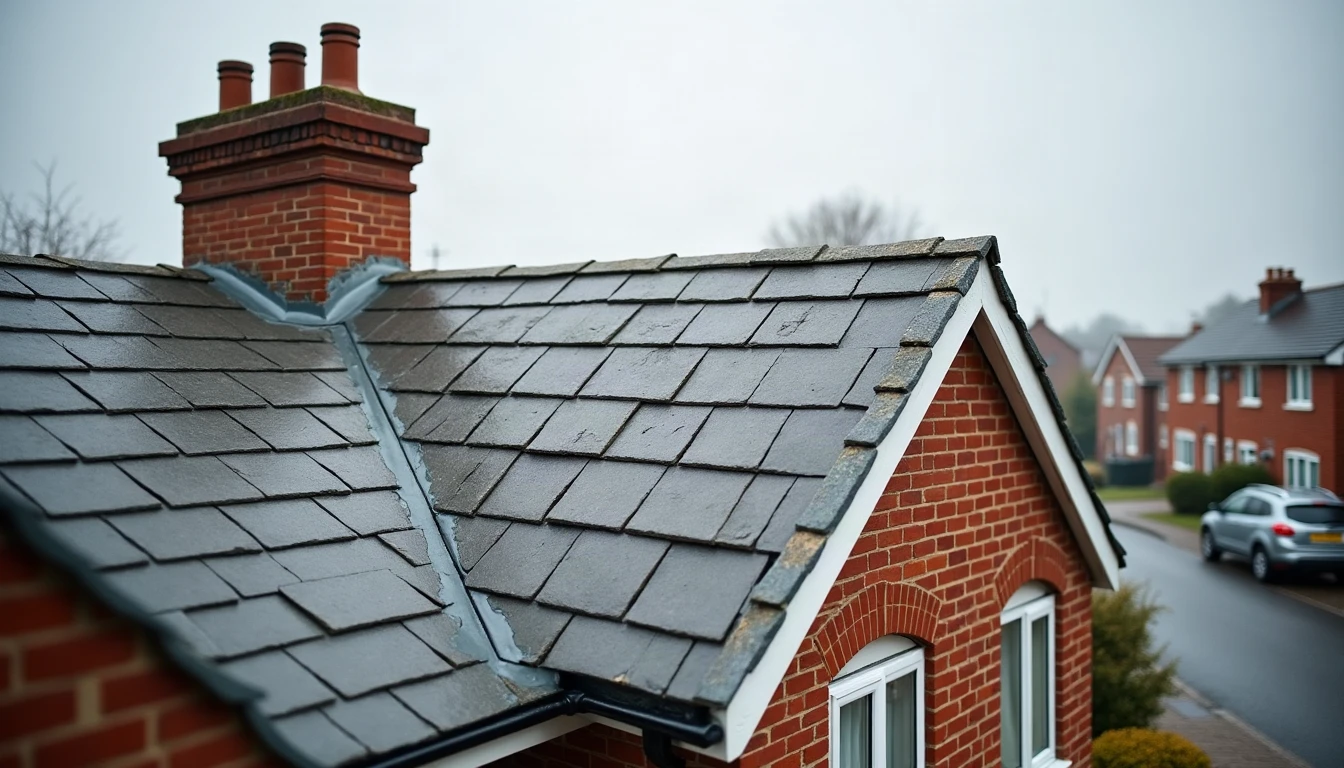
- Damaged flashing
- Water staining in loft spaces
- Damp patches appearing after heavy rain
- Unusual movement or rattling from the roof during strong winds
It is also worth checking the loft after severe weather if it can be done safely. Look for fresh water marks, damp timber or daylight where there should be none. Do not attempt to walk on the roof or investigate unstable areas yourself.
A professional inspection can identify defects that are difficult to see from the ground.
How Can Small Slate Defects Become Larger Problems?
Slate roofing works as a system rather than a collection of completely independent tiles. Each slate contributes to the roof’s ability to shed water.
When one slate becomes cracked or displaced, the overlapping protection in that area is reduced. Water may find a route underneath the covering, particularly when wind is forcing rain against the roof.
Moisture can then affect:
- The roofing underlay
- Timber battens
- Roof rafters
- Loft insulation
- Internal ceilings and wall finishes
Timber can be particularly vulnerable to prolonged damp conditions. The longer moisture remains undetected, the greater the possibility that secondary repairs will be required.
This is why timely slate roof repair can be more than simply replacing a broken piece of slate. A competent roofer should consider what caused the damage and whether surrounding areas show similar signs of deterioration.
What Type of Roof Do You Have?
Please select the roof type of your property. This helps us determine the best installation method and equipment for your home.
Flat Roof
Pitched Roof
It just takes 60 Sec
And then you can book a free consultation
Does Every Storm Mean You Need a New Roof?
No. Storm exposure alone does not mean a slate roof needs replacing.
The appropriate solution depends on factors such as the roof’s age, the extent of damage, the condition of the slates, the fixing system and the state of the supporting materials.
A roof with a handful of damaged slates may only require targeted repairs. In contrast, widespread movement, repeated leaks or significant deterioration may indicate that isolated repairs are becoming less practical.
A useful assessment should distinguish between:
- Localised damage: A small number of slates or fittings have failed.
- Recurring damage: Repairs are repeatedly required in the same areas.
- Widespread deterioration: Numerous components are approaching the end of their useful service life.
- Structural concerns: Water ingress has affected timbers or other supporting elements.
The objective should be to restore reliable weather protection rather than automatically recommend the most extensive option.
What Should a Professional Storm Damage Inspection Check?
After significant weather, an inspection should look beyond the most obvious broken slate.
A thorough assessment may consider:
- The overall alignment of the slate courses
- Cracked, slipped or missing slates
- Slate fixings and signs of corrosion
- Lead or other flashing around roof junctions
- Valleys and roof edges
- Chimney areas
- Underlay where accessible
- Loft timbers for signs of moisture
- Previous repair areas
- Gutters and downpipes
This wider inspection matters because the visible defect may only be the symptom.
For example, replacing a loose slate without checking why it moved could leave an underlying fixing problem untouched. Similarly, repairing an internal ceiling stain without identifying the roof entry point will not solve the source of the leak.
How Long Can a Slate Roof Repair Last?
The longevity of a repair depends on the condition of the surrounding roof and the quality and suitability of the repair itself.
A properly matched replacement slate, secure fixing and a correctly addressed underlying defect can provide a durable solution. However, if the surrounding roof covering is heavily weathered, another failure may occur nearby even after a sound local repair.
This is where professional judgement becomes important. Good slate roof repair should consider both the immediate defect and the condition of the surrounding area.
Homeowners should also be wary of temporary measures that are presented as permanent solutions. Tarpaulins, sealants or quick patches can sometimes provide short-term protection after an emergency, but they should not automatically be treated as a substitute for proper remedial work.
What Is the Best Approach After Storm Damage?
The first priority is safety. Do not climb onto a roof following severe weather, particularly when surfaces may be wet or unstable.
Instead:
- Check for obvious signs of internal water ingress.
- Move valuables away from active leaks where practical.
- Place a container beneath dripping water if safe to do so.
- Photograph visible damage from ground level.
- Arrange a professional assessment.
- Ask what caused the failure, not simply what needs replacing.
If the damage is significant or water is entering the property, storm damage roof repair may need to be arranged promptly to reduce further exposure.
In some cases, temporary protection may be appropriate while permanent work is planned. The right approach depends on the severity of the damage and current weather conditions.
A typical Worthing example
Consider a period property with an older slate roof close to the coast. Following several days of strong winds and heavy rain, the homeowner notices dampness around a loft window.
From the ground, the roof looks largely intact. However, an inspection identifies several displaced slates and deteriorated fixings around the affected section. Rather than simply treating the internal damp patch, the damaged roof area is addressed so that water cannot continue entering from above.
This illustrates why identifying the source of water ingress is essential. The visible internal damage may be several feet away from the actual entry point.
When Should You Arrange Repairs After Bad Weather?
There is no need to wait for a leak to become severe before seeking advice. Missing slates, visible movement and signs of water ingress are all reasonable reasons to arrange an inspection.
Early attention can make it easier to establish whether the problem is isolated or part of a broader pattern. It may also reduce the chance of prolonged moisture exposure to roof timbers and internal finishes.
Final Thoughts
Slate roofs are remarkably durable, but years of wind, rain and changing weather can gradually expose weaknesses that are easy to miss from the ground. Small defects can allow moisture beneath the roof covering, and repeated storms can turn isolated problems into recurring leaks.
The most sensible approach is to identify the source of the damage, assess the surrounding roof and choose a repair based on its actual condition. For homeowners in Worthing, All Roofing Works can provide practical guidance when weather has left a slate roof looking vulnerable. Where repairs are appropriate, addressing problems early can help protect the roof and the property beneath it for longer.
Related articles
What Type of Roof Do You Have?
Please select the roof type of your property. This helps us determine the best installation method and equipment for your home.
Flat Roof
Pitched Roof
Commercial Roof
At a glance
Introduction
Slate roofs can withstand decades of British weather, but even a well-built roof is not completely immune to persistent rain, strong winds and repeated storms. In coastal areas such as Worthing, exposure to wind-driven rain can be particularly demanding because moisture may reach parts of the roof that would normally remain relatively well protected.
The difficulty is that storm damage is not always obvious from ground level. A slate may shift slightly, a fixing can weaken, or a flashing joint may start allowing water underneath. The roof may still look acceptable while small defects gradually become larger problems.
Understanding how weather affects slate roofing can help homeowners recognise early warning signs and arrange appropriate repairs before a minor issue develops into extensive internal water damage.
Why Is Wind-Driven Rain Harder on a Slate Roof?
Ordinary rainfall generally falls downwards, allowing the overlapping slates and roof pitch to direct water towards the gutters. Wind changes how that water behaves.
During severe weather, rain can be pushed sideways and upwards against the roof surface. Strong gusts can also disturb slates, particularly where existing fixings have weakened with age.
Wind-driven rain can enter through:
- Small gaps between damaged or displaced slates
- Weak points around roof penetrations
- Deteriorated flashing
- Failed mortar or pointing
- Areas where previous repairs have deteriorated
- Damaged underlay beneath the slate covering
Once moisture gets beyond the outer layer, it can travel along timber or roofing materials before appearing as a stain inside the property. This means the visible location of a leak is not necessarily directly below the original defect.
For homeowners concerned about a weather-related problem.
What Happens to Slate Roofs During Repeated Storms?
A single storm does not necessarily cause serious damage. The bigger concern is cumulative wear.
Repeated exposure to strong winds can place stress on slate fixings. Individual slates may become loose or cracked, while older nails and other fixing systems can gradually deteriorate. Once one slate has moved, neighbouring areas can become more vulnerable because the overlapping arrangement of the roof covering has been disrupted.
Heavy rain can then exploit these weaknesses.
Over several winters, this cycle can turn a small defect into a recurring leak. A repair that appears successful during dry weather may reveal further weaknesses when the next period of prolonged rain arrives.
Common effects of storm exposure
|
Weather-related issue |
What can happen |
Potential consequence |
|
Loose slate |
Slate moves or lifts in strong winds |
Water can reach the roof structure |
|
Cracked slate |
A fracture allows moisture through |
Localised damp or leakage |
|
Failed fixing |
Slate is no longer held securely |
Further movement during storms |
|
Damaged flashing |
Junctions become exposed |
Water enters around chimneys or roof edges |
|
Deteriorated underlay |
Secondary protection becomes less effective |
Moisture reaches timbers |
|
Blocked or overwhelmed gutters |
Water cannot drain efficiently |
Overflow and additional moisture exposure |
The important point is that weather damage is often interconnected. Fixing one visible slate may not address the underlying reason why that slate failed.
Which Signs Suggest a Slate Roof Has Been Affected by Storms?
Some warning signs can be identified without climbing onto the roof. Looking from a safe position, homeowners may notice:
- Slates that appear uneven or out of alignment
- Missing sections of slate
- Cracked or broken slates
- Small pieces of slate around the property
- Damaged flashing
- Water staining in loft spaces
- Damp patches appearing after heavy rain
- Unusual movement or rattling from the roof during strong winds
It is also worth checking the loft after severe weather if it can be done safely. Look for fresh water marks, damp timber or daylight where there should be none. Do not attempt to walk on the roof or investigate unstable areas yourself.
A professional inspection can identify defects that are difficult to see from the ground.
How Can Small Slate Defects Become Larger Problems?
Slate roofing works as a system rather than a collection of completely independent tiles. Each slate contributes to the roof’s ability to shed water.
When one slate becomes cracked or displaced, the overlapping protection in that area is reduced. Water may find a route underneath the covering, particularly when wind is forcing rain against the roof.
Moisture can then affect:
- The roofing underlay
- Timber battens
- Roof rafters
- Loft insulation
- Internal ceilings and wall finishes
Timber can be particularly vulnerable to prolonged damp conditions. The longer moisture remains undetected, the greater the possibility that secondary repairs will be required.
This is why timely slate roof repair can be more than simply replacing a broken piece of slate. A competent roofer should consider what caused the damage and whether surrounding areas show similar signs of deterioration.
What Type of Roof Do You Have?
Please select the roof type of your property. This helps us determine the best installation method and equipment for your home.
Flat Roof
Pitched Roof
It just takes 60 Sec
And then you can book a free consultation
Does Every Storm Mean You Need a New Roof?
No. Storm exposure alone does not mean a slate roof needs replacing.
The appropriate solution depends on factors such as the roof’s age, the extent of damage, the condition of the slates, the fixing system and the state of the supporting materials.
A roof with a handful of damaged slates may only require targeted repairs. In contrast, widespread movement, repeated leaks or significant deterioration may indicate that isolated repairs are becoming less practical.
A useful assessment should distinguish between:
- Localised damage: A small number of slates or fittings have failed.
- Recurring damage: Repairs are repeatedly required in the same areas.
- Widespread deterioration: Numerous components are approaching the end of their useful service life.
- Structural concerns: Water ingress has affected timbers or other supporting elements.
The objective should be to restore reliable weather protection rather than automatically recommend the most extensive option.
What Should a Professional Storm Damage Inspection Check?
After significant weather, an inspection should look beyond the most obvious broken slate.
A thorough assessment may consider:
- The overall alignment of the slate courses
- Cracked, slipped or missing slates
- Slate fixings and signs of corrosion
- Lead or other flashing around roof junctions
- Valleys and roof edges
- Chimney areas
- Underlay where accessible
- Loft timbers for signs of moisture
- Previous repair areas
- Gutters and downpipes
This wider inspection matters because the visible defect may only be the symptom.
For example, replacing a loose slate without checking why it moved could leave an underlying fixing problem untouched. Similarly, repairing an internal ceiling stain without identifying the roof entry point will not solve the source of the leak.
How Long Can a Slate Roof Repair Last?
The longevity of a repair depends on the condition of the surrounding roof and the quality and suitability of the repair itself.
A properly matched replacement slate, secure fixing and a correctly addressed underlying defect can provide a durable solution. However, if the surrounding roof covering is heavily weathered, another failure may occur nearby even after a sound local repair.
This is where professional judgement becomes important. Good slate roof repair should consider both the immediate defect and the condition of the surrounding area.
Homeowners should also be wary of temporary measures that are presented as permanent solutions. Tarpaulins, sealants or quick patches can sometimes provide short-term protection after an emergency, but they should not automatically be treated as a substitute for proper remedial work.
What Is the Best Approach After Storm Damage?
The first priority is safety. Do not climb onto a roof following severe weather, particularly when surfaces may be wet or unstable.
Instead:
- Check for obvious signs of internal water ingress.
- Move valuables away from active leaks where practical.
- Place a container beneath dripping water if safe to do so.
- Photograph visible damage from ground level.
- Arrange a professional assessment.
- Ask what caused the failure, not simply what needs replacing.
If the damage is significant or water is entering the property, storm damage roof repair may need to be arranged promptly to reduce further exposure.
In some cases, temporary protection may be appropriate while permanent work is planned. The right approach depends on the severity of the damage and current weather conditions.
A typical Worthing example
Consider a period property with an older slate roof close to the coast. Following several days of strong winds and heavy rain, the homeowner notices dampness around a loft window.
From the ground, the roof looks largely intact. However, an inspection identifies several displaced slates and deteriorated fixings around the affected section. Rather than simply treating the internal damp patch, the damaged roof area is addressed so that water cannot continue entering from above.
This illustrates why identifying the source of water ingress is essential. The visible internal damage may be several feet away from the actual entry point.
When Should You Arrange Repairs After Bad Weather?
There is no need to wait for a leak to become severe before seeking advice. Missing slates, visible movement and signs of water ingress are all reasonable reasons to arrange an inspection.
Early attention can make it easier to establish whether the problem is isolated or part of a broader pattern. It may also reduce the chance of prolonged moisture exposure to roof timbers and internal finishes.
Final Thoughts
Slate roofs are remarkably durable, but years of wind, rain and changing weather can gradually expose weaknesses that are easy to miss from the ground. Small defects can allow moisture beneath the roof covering, and repeated storms can turn isolated problems into recurring leaks.
The most sensible approach is to identify the source of the damage, assess the surrounding roof and choose a repair based on its actual condition. For homeowners in Worthing, All Roofing Works can provide practical guidance when weather has left a slate roof looking vulnerable. Where repairs are appropriate, addressing problems early can help protect the roof and the property beneath it for longer.
Related articles
What Type of Roof Do You Have?
Please select the roof type of your property. This helps us determine the best installation method and equipment for your home.
Flat Roof
Pitched Roof
Commercial Roof