Why Roof Leaks Around Chimneys Need a Different Repair Approach in Worthing
A leak that appears close to a chimney can look straightforward, but the point where water becomes visible indoors is not always the point where it first entered the roof.

Why you can trust our content
We understand that the roofing industry can be confusing, with plenty of outdated or misleading information. That’s why we rely only on trusted, proven sources to guide our advice and installations:






At a glance
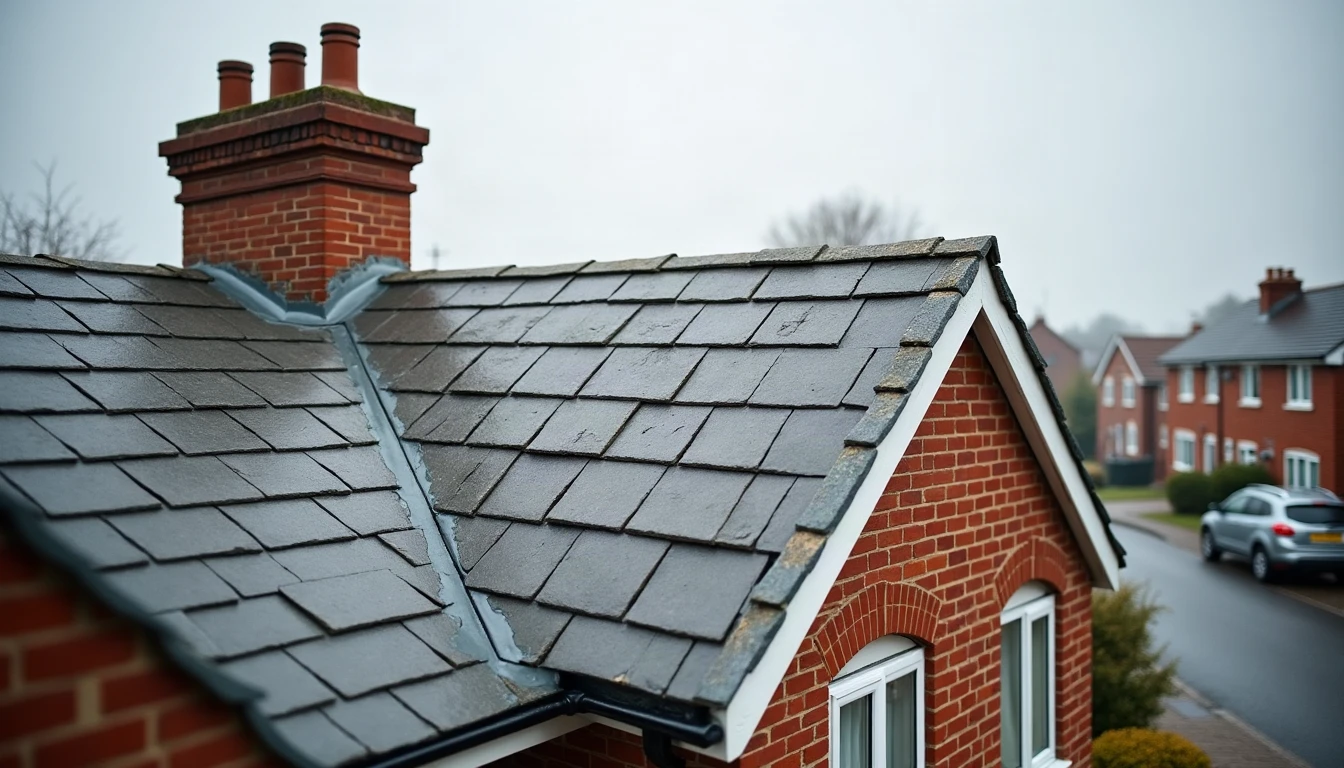
Chimney stacks create several junctions between masonry, tiles or slates, leadwork, mortar and the roof covering. When one part of that junction fails, rainwater can travel before it reaches a ceiling, loft timber or internal wall.
That is why leaks around chimneys need a more careful diagnosis than simply sealing the first visible gap. Defective flashing at roof junctions is a common source of leaks, particularly where the roof meets a chimney stack. The surrounding mortar, roof covering, and drainage details can also contribute.
For homeowners arranging roof leak repair Worthing, the useful first step is to identify the actual route of the water rather than assuming the chimney itself is the only problem.
Why are chimney leaks different from other roof leaks?
A chimney interrupts the continuous surface of a pitched roof. Instead of rain simply running down tiles or slates towards the gutter, water has to be directed safely around the stack.
This normally relies on several details working together. Depending on the roof and age of the property, these can include:
- Flashing where the chimney meets the roof covering
- Soakers beneath tiles or slates
- A back gutter or similar detail behind the stack
- Mortar joints around the chimney
- Flaunching around chimney pots
- Sound tiles or slates immediately beside the stack
- Clear drainage paths that allow rainwater to move away
If one component deteriorates, moisture may get behind another. Split, damaged or displaced leadwork can allow water through, while back gutters behind chimneys can also cause problems if they become obstructed.
Where can water enter around a chimney?
There is no single cause that applies to every property. A roofer should look at the whole chimney-to-roof junction rather than focusing on one detail in isolation.
|
Possible problem |
What may happen |
What should be checked |
|
Damaged or loose flashing |
Water gets behind the weatherproof junction |
Splits, lifting, poor joints and fixing condition |
|
Cracked mortar |
Gaps allow moisture into the stack or junction |
Pointing, mortar fillets and surrounding masonry |
|
Blocked back gutter |
Water cannot drain freely behind the chimney |
Leaves, debris and condition of the gutter detail |
|
Slipped or cracked tiles |
Rain reaches the underlay or roof structure |
Tiles and slates surrounding the stack |
|
Deteriorated flaunching |
Water enters around the top of the chimney |
Cracks and loose material around chimney pots |
|
Previous patch repairs |
Short-term sealant hides the underlying fault |
Older repairs and the detail beneath them |
This is why the position of an internal stain can be misleading. Water can run along the underside of a tile, membrane, timber or masonry before it becomes visible.
What are the warning signs of a chimney-related leak?
An obvious drip during heavy rain is only one sign. Some chimney leaks develop gradually and are first noticed as discolouration or a musty patch.
Look out for:
- Brown or yellow staining on ceilings near the chimney breast
- Damp patches in the loft around the stack
- Peeling paint or wallpaper
- Darkened roof timbers
- Damp or crumbling plaster around the chimney breast
- Visible gaps or lifting in external flashing
- Loose, cracked or missing tiles beside the chimney
- Moisture that becomes worse during wind-driven rain
A visible damp patch does not automatically tell you which part of the chimney junction has failed. That is why identifying the source before starting repair work is important.
What Type of Roof Do You Have?
Please select the roof type of your property. This helps us determine the best installation method and equipment for your home.
Flat Roof
Pitched Roof
It just takes 60 Sec
And then you can book a free consultation
How should the source of the leak be diagnosed?
A good inspection starts with evidence rather than assumptions. The roofer may examine the roof covering, chimney masonry and weatherproofing externally, then look inside the loft where access allows.
The aim is to answer three questions:
- Where is water most likely entering?
- Has it damaged anything beneath the roof covering?
- Is the defect localised, or is it part of a wider roofing problem?
This diagnostic stage is what makes a proper chimney flashing repair different from applying sealant to a visible joint. The repair should address the construction detail that has failed and restore a reliable route for rainwater away from the chimney.
What can a proper repair involve?
The correct work depends entirely on what the inspection finds. Not every chimney leak requires extensive roofing work.
A localised repair might involve replacing a damaged section of flashing, securing surrounding roof coverings, repairing defective mortar or clearing a blocked back gutter. More extensive deterioration can require sections of the roof around the chimney to be carefully lifted so the junction can be rebuilt correctly.
The key point is that the repair should solve the route of water ingress, not simply make the outside look sealed.
In some cases, several minor defects can be contributing at the same time. For example, worn mortar might allow moisture into one part of the stack while a damaged tile creates a second entry point lower down. Fixing only one problem could therefore leave the homeowner wondering why damp has returned after the next period of heavy rain.
Why do quick patches sometimes fail?
Roofing sealants and temporary coverings can be useful as emergency measures in some situations, but they are not automatically a permanent repair.
A patch may fail because:
- Water is entering from higher up the stack
- The underlying flashing has split or moved
- Mortar continues to deteriorate beneath the patch
- Water is being trapped rather than directed away
- Another damaged tile or slate has been missed
- The repair has covered the symptom rather than the cause
Repeatedly sealing the same area can also make later diagnosis more difficult. If water keeps returning after previous work, it is worth having the entire chimney junction inspected rather than repeating the same treatment.
This is particularly important when a previous repair has been carried out without checking what is happening beneath nearby tiles or slates. The cheapest-looking repair at the outset is not necessarily the most economical option if the same leak has to be addressed several times.
When should a chimney leak be dealt with?
Active leaks should be assessed promptly. Water entering the roof space can affect plaster, decoration, insulation and timber if the problem continues.
You do not necessarily need to wait for another spell of heavy rain. Evidence such as staining, dampness or visible deterioration can be enough to justify an inspection, particularly if the affected area is getting larger.
For roof leak repair Worthing, homeowners should also consider the age and general condition of the surrounding roof. An isolated leak or missing tile may sometimes only require local maintenance rather than complete roof replacement.
That distinction matters. A responsible assessment should establish whether the problem is genuinely localised before recommending larger works.
Can homeowners inspect the chimney themselves?
It is reasonable to look for signs from ground level or from inside the loft if it is safe and accessible. You may be able to spot damp timber, staining or daylight around an obvious defect.
Climbing onto the roof is different. Roof work carries a serious fall risk, and suitable access equipment may be required.
Homeowners should therefore avoid taking unnecessary risks simply to get a closer look at the flashing. A professional roofer can assess areas that are difficult to see safely from ground level.
Why does the condition of the surrounding roof matter?
A leaking chimney should not always be treated as an isolated component. The tiles, slates and roof structure immediately around the stack influence how effectively water is directed away.
For example, replacing damaged flashing may not provide a lasting solution if neighbouring tiles are cracked or have moved. Likewise, repairing a broken tile may not solve the problem if water is entering higher up around deteriorated leadwork.
This is why a thorough roof leak repair Worthing assessment should consider the wider area around the chimney rather than treating each visible defect separately.
The condition of the wider roof also helps determine whether a repair is likely to offer good long-term value. On a generally sound roof, a targeted repair may be all that is required. If several components around the chimney have reached the end of their serviceable life, a more comprehensive repair may prove more practical.
When might chimney flashing need replacing?
Not every problem requires complete replacement. Minor defects can sometimes be repaired where the surrounding material remains in good condition.
Replacement may be considered when flashing is:
- Split or badly cracked
- Loose or significantly displaced
- Poorly fitted from previous work
- Heavily deteriorated
- No longer forming an effective weatherproof junction
- Surrounded by failing mortar or roof coverings
A professional chimney flashing repair should be based on the actual condition of the existing detail rather than assuming replacement is always necessary.
The goal is to create a durable junction that allows rainwater to flow safely around the chimney and down the roof.
A careful diagnosis usually leads to a better repair
A chimney leak is rarely something to diagnose from the internal stain alone. Flashing, mortar, tiles or slates, drainage around the stack and previous repairs can all influence where rainwater gets in.
For homeowners in Worthing dealing with a leak around a chimney, the most suitable repair starts with tracing the likely entry point and checking the surrounding roof before work is recommended.
All Roofing Works supports homeowners with roofing repairs and assessments across Worthing. A careful inspection can help establish whether you are dealing with a small localised defect or a problem that requires more extensive attention.
Related articles

What Type of Roof Do You Have?
Please select the roof type of your property. This helps us determine the best installation method and equipment for your home.
Flat Roof
Pitched Roof
Commercial Roof
At a glance
Chimney stacks create several junctions between masonry, tiles or slates, leadwork, mortar and the roof covering. When one part of that junction fails, rainwater can travel before it reaches a ceiling, loft timber or internal wall.
That is why leaks around chimneys need a more careful diagnosis than simply sealing the first visible gap. Defective flashing at roof junctions is a common source of leaks, particularly where the roof meets a chimney stack. The surrounding mortar, roof covering, and drainage details can also contribute.
For homeowners arranging roof leak repair Worthing, the useful first step is to identify the actual route of the water rather than assuming the chimney itself is the only problem.
Why are chimney leaks different from other roof leaks?
A chimney interrupts the continuous surface of a pitched roof. Instead of rain simply running down tiles or slates towards the gutter, water has to be directed safely around the stack.
This normally relies on several details working together. Depending on the roof and age of the property, these can include:
- Flashing where the chimney meets the roof covering
- Soakers beneath tiles or slates
- A back gutter or similar detail behind the stack
- Mortar joints around the chimney
- Flaunching around chimney pots
- Sound tiles or slates immediately beside the stack
- Clear drainage paths that allow rainwater to move away
If one component deteriorates, moisture may get behind another. Split, damaged or displaced leadwork can allow water through, while back gutters behind chimneys can also cause problems if they become obstructed.
Where can water enter around a chimney?
There is no single cause that applies to every property. A roofer should look at the whole chimney-to-roof junction rather than focusing on one detail in isolation.
|
Possible problem |
What may happen |
What should be checked |
|
Damaged or loose flashing |
Water gets behind the weatherproof junction |
Splits, lifting, poor joints and fixing condition |
|
Cracked mortar |
Gaps allow moisture into the stack or junction |
Pointing, mortar fillets and surrounding masonry |
|
Blocked back gutter |
Water cannot drain freely behind the chimney |
Leaves, debris and condition of the gutter detail |
|
Slipped or cracked tiles |
Rain reaches the underlay or roof structure |
Tiles and slates surrounding the stack |
|
Deteriorated flaunching |
Water enters around the top of the chimney |
Cracks and loose material around chimney pots |
|
Previous patch repairs |
Short-term sealant hides the underlying fault |
Older repairs and the detail beneath them |
This is why the position of an internal stain can be misleading. Water can run along the underside of a tile, membrane, timber or masonry before it becomes visible.
What are the warning signs of a chimney-related leak?
An obvious drip during heavy rain is only one sign. Some chimney leaks develop gradually and are first noticed as discolouration or a musty patch.
Look out for:
- Brown or yellow staining on ceilings near the chimney breast
- Damp patches in the loft around the stack
- Peeling paint or wallpaper
- Darkened roof timbers
- Damp or crumbling plaster around the chimney breast
- Visible gaps or lifting in external flashing
- Loose, cracked or missing tiles beside the chimney
- Moisture that becomes worse during wind-driven rain
A visible damp patch does not automatically tell you which part of the chimney junction has failed. That is why identifying the source before starting repair work is important.
What Type of Roof Do You Have?
Please select the roof type of your property. This helps us determine the best installation method and equipment for your home.
Flat Roof
Pitched Roof
It just takes 60 Sec
And then you can book a free consultation
How should the source of the leak be diagnosed?
A good inspection starts with evidence rather than assumptions. The roofer may examine the roof covering, chimney masonry and weatherproofing externally, then look inside the loft where access allows.
The aim is to answer three questions:
- Where is water most likely entering?
- Has it damaged anything beneath the roof covering?
- Is the defect localised, or is it part of a wider roofing problem?
This diagnostic stage is what makes a proper chimney flashing repair different from applying sealant to a visible joint. The repair should address the construction detail that has failed and restore a reliable route for rainwater away from the chimney.
What can a proper repair involve?
The correct work depends entirely on what the inspection finds. Not every chimney leak requires extensive roofing work.
A localised repair might involve replacing a damaged section of flashing, securing surrounding roof coverings, repairing defective mortar or clearing a blocked back gutter. More extensive deterioration can require sections of the roof around the chimney to be carefully lifted so the junction can be rebuilt correctly.
The key point is that the repair should solve the route of water ingress, not simply make the outside look sealed.
In some cases, several minor defects can be contributing at the same time. For example, worn mortar might allow moisture into one part of the stack while a damaged tile creates a second entry point lower down. Fixing only one problem could therefore leave the homeowner wondering why damp has returned after the next period of heavy rain.
Why do quick patches sometimes fail?
Roofing sealants and temporary coverings can be useful as emergency measures in some situations, but they are not automatically a permanent repair.
A patch may fail because:
- Water is entering from higher up the stack
- The underlying flashing has split or moved
- Mortar continues to deteriorate beneath the patch
- Water is being trapped rather than directed away
- Another damaged tile or slate has been missed
- The repair has covered the symptom rather than the cause
Repeatedly sealing the same area can also make later diagnosis more difficult. If water keeps returning after previous work, it is worth having the entire chimney junction inspected rather than repeating the same treatment.
This is particularly important when a previous repair has been carried out without checking what is happening beneath nearby tiles or slates. The cheapest-looking repair at the outset is not necessarily the most economical option if the same leak has to be addressed several times.
When should a chimney leak be dealt with?
Active leaks should be assessed promptly. Water entering the roof space can affect plaster, decoration, insulation and timber if the problem continues.
You do not necessarily need to wait for another spell of heavy rain. Evidence such as staining, dampness or visible deterioration can be enough to justify an inspection, particularly if the affected area is getting larger.
For roof leak repair Worthing, homeowners should also consider the age and general condition of the surrounding roof. An isolated leak or missing tile may sometimes only require local maintenance rather than complete roof replacement.
That distinction matters. A responsible assessment should establish whether the problem is genuinely localised before recommending larger works.
Can homeowners inspect the chimney themselves?
It is reasonable to look for signs from ground level or from inside the loft if it is safe and accessible. You may be able to spot damp timber, staining or daylight around an obvious defect.
Climbing onto the roof is different. Roof work carries a serious fall risk, and suitable access equipment may be required.
Homeowners should therefore avoid taking unnecessary risks simply to get a closer look at the flashing. A professional roofer can assess areas that are difficult to see safely from ground level.
Why does the condition of the surrounding roof matter?
A leaking chimney should not always be treated as an isolated component. The tiles, slates and roof structure immediately around the stack influence how effectively water is directed away.
For example, replacing damaged flashing may not provide a lasting solution if neighbouring tiles are cracked or have moved. Likewise, repairing a broken tile may not solve the problem if water is entering higher up around deteriorated leadwork.
This is why a thorough roof leak repair Worthing assessment should consider the wider area around the chimney rather than treating each visible defect separately.
The condition of the wider roof also helps determine whether a repair is likely to offer good long-term value. On a generally sound roof, a targeted repair may be all that is required. If several components around the chimney have reached the end of their serviceable life, a more comprehensive repair may prove more practical.
When might chimney flashing need replacing?
Not every problem requires complete replacement. Minor defects can sometimes be repaired where the surrounding material remains in good condition.
Replacement may be considered when flashing is:
- Split or badly cracked
- Loose or significantly displaced
- Poorly fitted from previous work
- Heavily deteriorated
- No longer forming an effective weatherproof junction
- Surrounded by failing mortar or roof coverings
A professional chimney flashing repair should be based on the actual condition of the existing detail rather than assuming replacement is always necessary.
The goal is to create a durable junction that allows rainwater to flow safely around the chimney and down the roof.
A careful diagnosis usually leads to a better repair
A chimney leak is rarely something to diagnose from the internal stain alone. Flashing, mortar, tiles or slates, drainage around the stack and previous repairs can all influence where rainwater gets in.
For homeowners in Worthing dealing with a leak around a chimney, the most suitable repair starts with tracing the likely entry point and checking the surrounding roof before work is recommended.
All Roofing Works supports homeowners with roofing repairs and assessments across Worthing. A careful inspection can help establish whether you are dealing with a small localised defect or a problem that requires more extensive attention.
Related articles
What Type of Roof Do You Have?
Please select the roof type of your property. This helps us determine the best installation method and equipment for your home.
Flat Roof
Pitched Roof
Commercial Roof