When Is a Specialist Repair Better Than a General Roof Fix in Worthing?
Not every roofing problem requires specialist work. A single slipped tile, a straightforward local defect or minor damage to an otherwise sound roof may be resolved with a relatively simple repair.

Why you can trust our content
We understand that the roofing industry can be confusing, with plenty of outdated or misleading information. That’s why we rely only on trusted, proven sources to guide our advice and installations:






At a glance
Other problems are harder to diagnose, involve several parts of the roof or keep returning despite previous work.
The difficulty for homeowners is knowing which situation they are dealing with. A quick fix can appear attractive when water is entering the property, but repeatedly repairing the symptom without identifying the underlying cause can become expensive and frustrating.
When arranging roof repair in Worthing, the best approach is usually determined by the complexity and condition of the roof rather than simply the size of the visible problem.
What is the difference between a general roof fix and a specialist repair?
A general roof repair normally deals with a clear, localised fault where the cause can be identified relatively easily.
Examples might include:
- Replacing an isolated broken tile
- Securing a slipped slate
- Repairing a small section of damaged felt
- Clearing debris from a drainage point
- Addressing a minor localised defect
- Replacing a visibly damaged component
A specialist repair becomes more valuable when the problem is harder to diagnose or involves a particular roofing material, junction or failure pattern.
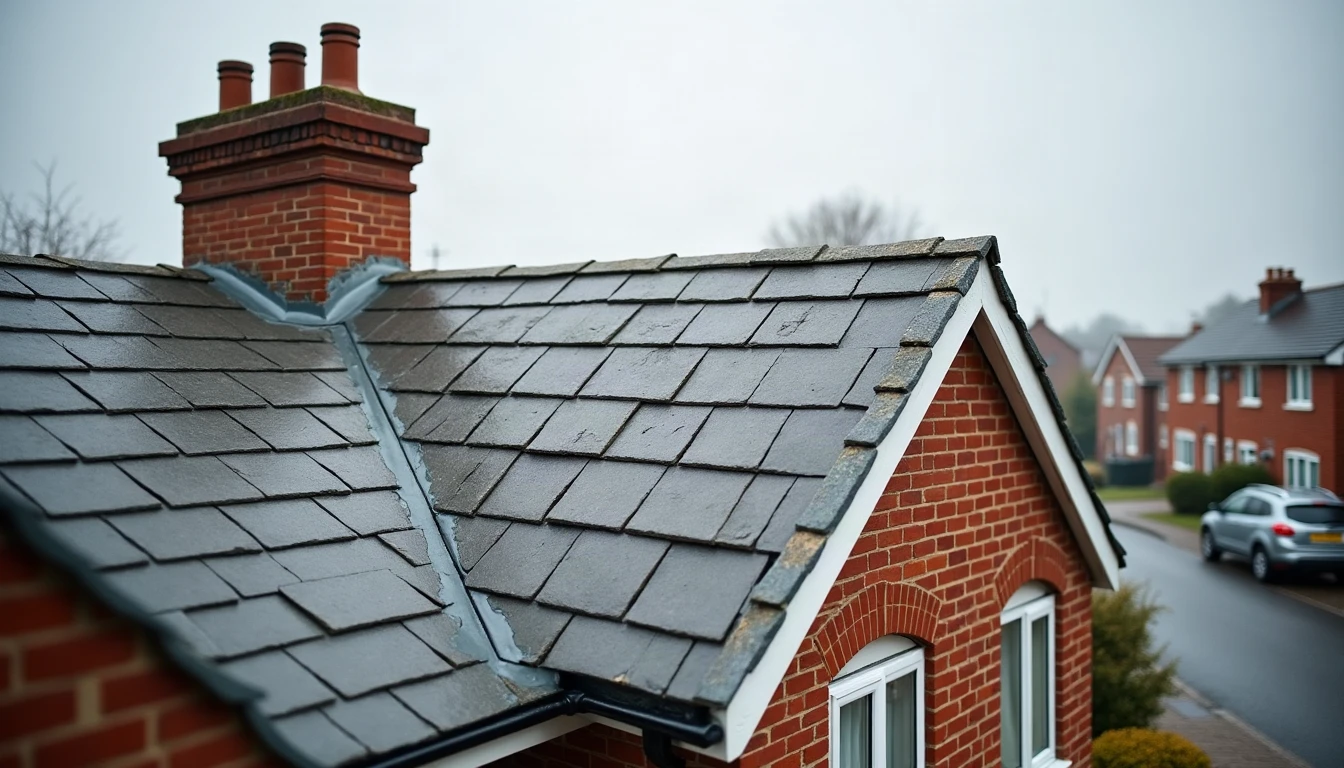
For example, water entering around a chimney may involve flashing, masonry, tiles and drainage details working together. A recurring flat roof leak could involve the covering, roof deck, falls or an ageing previous repair.
The difference is therefore less about whether a repair is “big” or “small” and more about the level of investigation and technical understanding required.
When is a straightforward repair usually enough?
There are many situations where a simple local repair is entirely appropriate.
If one component has clearly failed while the surrounding roof remains in good condition, replacing or repairing that component may solve the problem without unnecessary additional work.
For example, a storm may damage one tile while neighbouring tiles remain secure. A small area of felt may be affected by isolated impact damage. One slate may slip even though the wider roof covering is stable.
A straightforward repair is more likely to be suitable when:
- The cause of the defect is clear
- Damage is confined to a small area
- The surrounding roof is sound
- There is little or no history of recurring leaks
- Previous repairs nearby remain secure
- No significant structural movement is visible
- Water ingress has not spread across several areas
The important point is not to make a repair more complicated than it needs to be.
A good roofing assessment should be proportionate. If a local repair will genuinely solve the issue, there should be no reason to recommend more extensive work.
What signs suggest a specialist repair may be worthwhile?
Certain patterns should prompt a more detailed investigation.
A roof repair specialist may be particularly useful when the visible defect does not explain the symptoms or when the same problem has already been addressed unsuccessfully.
Warning signs can include:
- Water returning after previous repairs
- Damp appearing away from the suspected entry point
- Several roof components deteriorating together
- Damage around chimneys, valleys or roof junctions
- Widespread movement in tiles or slates
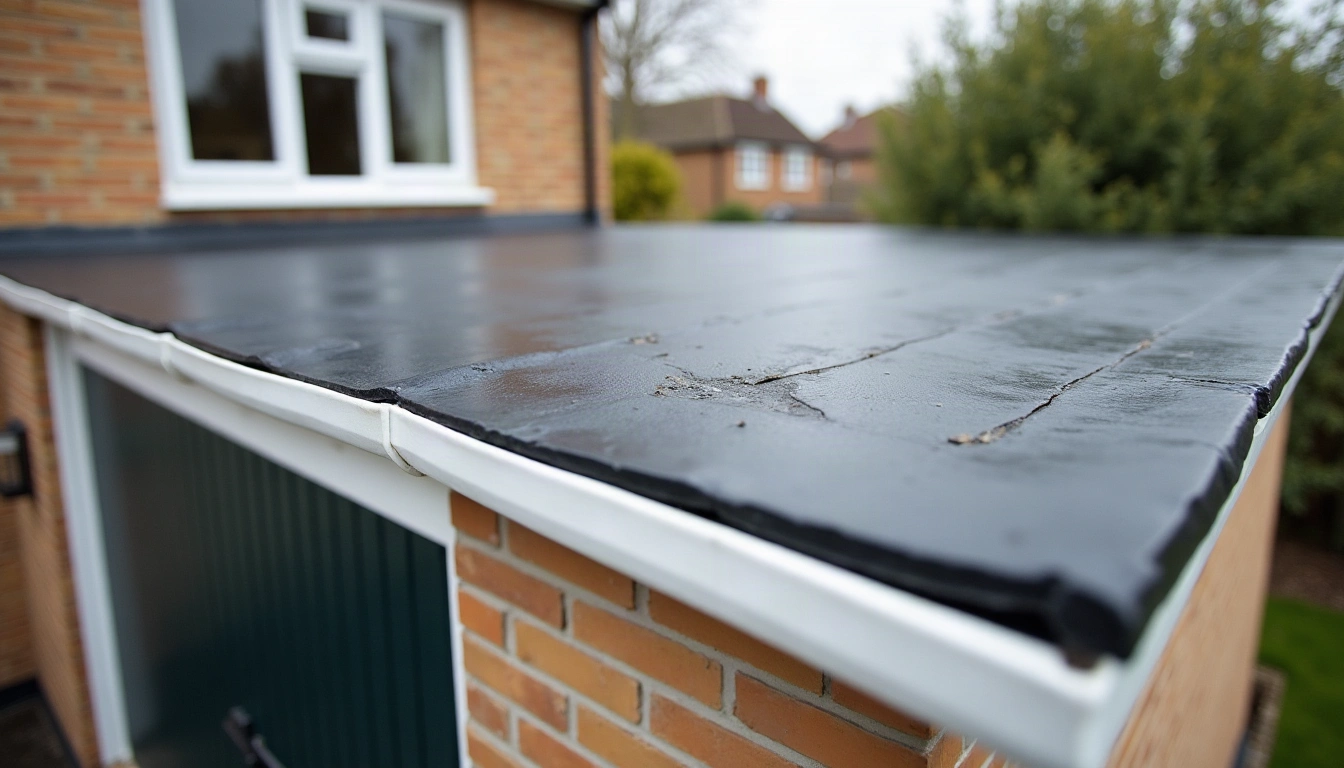
- Repeated flat roof blistering or cracking
- Large areas of ponding water
- Several old patches across the same roof
- Difficult-to-access defects
- Uncertainty about whether repair or replacement offers better value
These situations require more than simply covering a visible opening.
The roofer may need to trace where water is travelling, inspect neighbouring materials and determine whether the apparent defect is the cause or merely one symptom of a wider problem.
Which roofing problems often need more detailed investigation?
Some areas of a roof naturally involve more components and therefore require more careful diagnosis.
|
Roofing problem |
Why it can be complex |
What may need checking |
|
Chimney leak |
Several roof and masonry junctions meet |
Flashing, mortar, tiles, back gutters |
|
Recurring flat roof leak |
Water can travel beneath coverings |
Surface, seams, deck and drainage |
|
Repeated slipped slates |
Individual failures may share a cause |
Fixings and surrounding slates |
|
Valley leak |
Large volumes of water pass through one area |
Lining, tiles and surrounding junctions |
|
Roof edge damage |
Wind exposure can affect several components |
Fixings, coverings and edge details |
|
Persistent internal damp |
Entry point may be elsewhere |
Full route of moisture |
|
Multiple previous repairs |
Original cause may remain unresolved |
Old repairs and surrounding roof |
|
Localised sagging |
Surface symptoms may relate to structure |
Roof deck and supporting elements |
This is why the most obvious problem is not always the most important one.
A damp ceiling several metres from a chimney, for instance, does not necessarily mean water entered directly above the stain. Water may have travelled along roof timbers or beneath the covering before becoming visible indoors.
Why do some roof repairs keep failing?
Recurring failures can happen for several reasons.
One of the most common is treating the symptom instead of the source.
Imagine that water appears beneath a flat roof and a visible surface crack is patched. If the real problem is movement in the roof deck or water collecting because the roof is no longer draining correctly, the patch may eventually fail again.
Another possibility is that the original repair solved one defect while a neighbouring component was already beginning to deteriorate.
Repeated problems can therefore result from:
- Incomplete diagnosis
- Deterioration surrounding the original defect
- Incompatible repair materials
- Movement within the roof
- Poor drainage
- Ageing roof coverings
- Previous temporary repairs
- Water entering from a different location
This does not mean every failed repair was necessarily poor workmanship. Roofing systems change over time, and one component can deteriorate after another has been repaired.
What matters is recognising when repeating the same treatment is no longer the most sensible approach.
How should you compare different repair recommendations?
Receiving two different recommendations from roofers can be confusing.
One contractor might suggest a targeted repair, while another recommends opening a larger section of the roof. That does not automatically mean one is wrong.
The useful question is whether each recommendation explains:
- What the contractor believes has failed
- How they reached that conclusion
- What work they propose carrying out
- Whether surrounding areas will be inspected
- What the repair is designed to achieve
- Whether further defects could be present
- What happens if additional damage is discovered
Homeowners should feel comfortable asking why a particular method has been recommended.
A clear explanation is especially important when more extensive work is proposed. You should understand why a small repair is unlikely to provide the same result.
Does specialist automatically mean more expensive?
Not necessarily.
Specialist diagnosis may sometimes lead to a more involved repair, but it can also prevent unnecessary work.
Consider a recurring leak that has already received several temporary patches. Continuing to pay for individual fixes could eventually cost more than identifying and correcting the underlying defect properly.
Conversely, a detailed inspection might confirm that the problem is genuinely localised and only requires a small repair.
The objective should therefore be value rather than simply the lowest initial price.
When comparing options for roof repair in Worthing, consider:
- Whether the cause has been clearly identified
- How likely the proposed repair is to last
- The condition of neighbouring roof components
- Whether the same area has failed previously
- Whether additional work is genuinely necessary
- The consequences of delaying the correct repair
Price matters, but the cheapest quotation is not automatically the best value if the underlying problem remains unresolved.
How can you tell whether a roofing company has investigated properly?
Homeowners do not need technical roofing knowledge to ask sensible questions.
After an inspection, a contractor should generally be able to explain what they found in straightforward language.
Useful information might include:
- Where the suspected defect is located
- Whether the issue appears localised
- The condition of surrounding materials
- Why water is entering the property
- Whether previous repairs are contributing
- What repair options are available
- Whether any further investigation is needed
Photographs can also be helpful when the defect is somewhere the homeowner cannot safely see.
Be cautious of conclusions reached without looking at enough of the roof to support them. Equally, complicated terminology should not be used to make a straightforward repair sound unnecessarily technical.
A good assessment should make the decision clearer, not more confusing.
When should replacement be discussed instead of another repair?
Specialist repair does not mean repeatedly repairing a roof indefinitely.
There comes a point where widespread deterioration can make further local repairs less worthwhile.
Replacement may deserve consideration when:
- Large areas of roof covering have deteriorated
- Problems are occurring across several sections
- Repairs are becoming increasingly frequent
- Supporting materials have been affected
- The roof has several interconnected defects
- Continued repair costs are becoming disproportionate
However, age alone should not determine the recommendation.
An older roof in generally good condition may still be perfectly suitable for repair. A newer roof can develop problems that require more substantial work if defects are widespread.
A responsible roof repair specialist should therefore assess condition rather than assume replacement based solely on age or appearance.
Can homeowners diagnose the problem themselves?
You can often collect useful information safely.
Note when the problem occurs, such as during prolonged rain, wind-driven rain or immediately after a storm. Look for visible defects from ground level and check the loft for damp or staining if it is safely accessible.
Useful details include:
- When the leak first appeared
- Whether it happens every time it rains
- Whether the area has been repaired previously
- Whether the stain is growing
- Any visible external damage
- Photographs of internal damp
Avoid climbing onto the roof yourself. Roofing defects can make surfaces unstable, and safe access often requires appropriate equipment.
Giving this information to the roofer can help with diagnosis while keeping the investigation safe.
What Type of Roof Do You Have?
Please select the roof type of your property. This helps us determine the best installation method and equipment for your home.
Flat Roof
Pitched Roof
It just takes 60 Sec
And then you can book a free consultation
Choose the repair that matches the problem
The best roofing repair is not automatically the simplest option or the most extensive one. It is the repair that deals appropriately with the cause of the problem.
Straightforward damage on an otherwise healthy roof can often be resolved with targeted work. Recurring leaks, complicated junctions and multiple connected defects may require a deeper investigation before repairs begin.
For homeowners considering roof repair in Worthing, the key is understanding why the problem has developed and whether the proposed work offers a sensible long-term solution.
All Roofing Works supports homeowners throughout Worthing and the surrounding West Sussex area with roof assessments and repairs. Our team can investigate the condition of the affected area, explain what has been found and recommend work based on what the roof genuinely needs.
Related articles
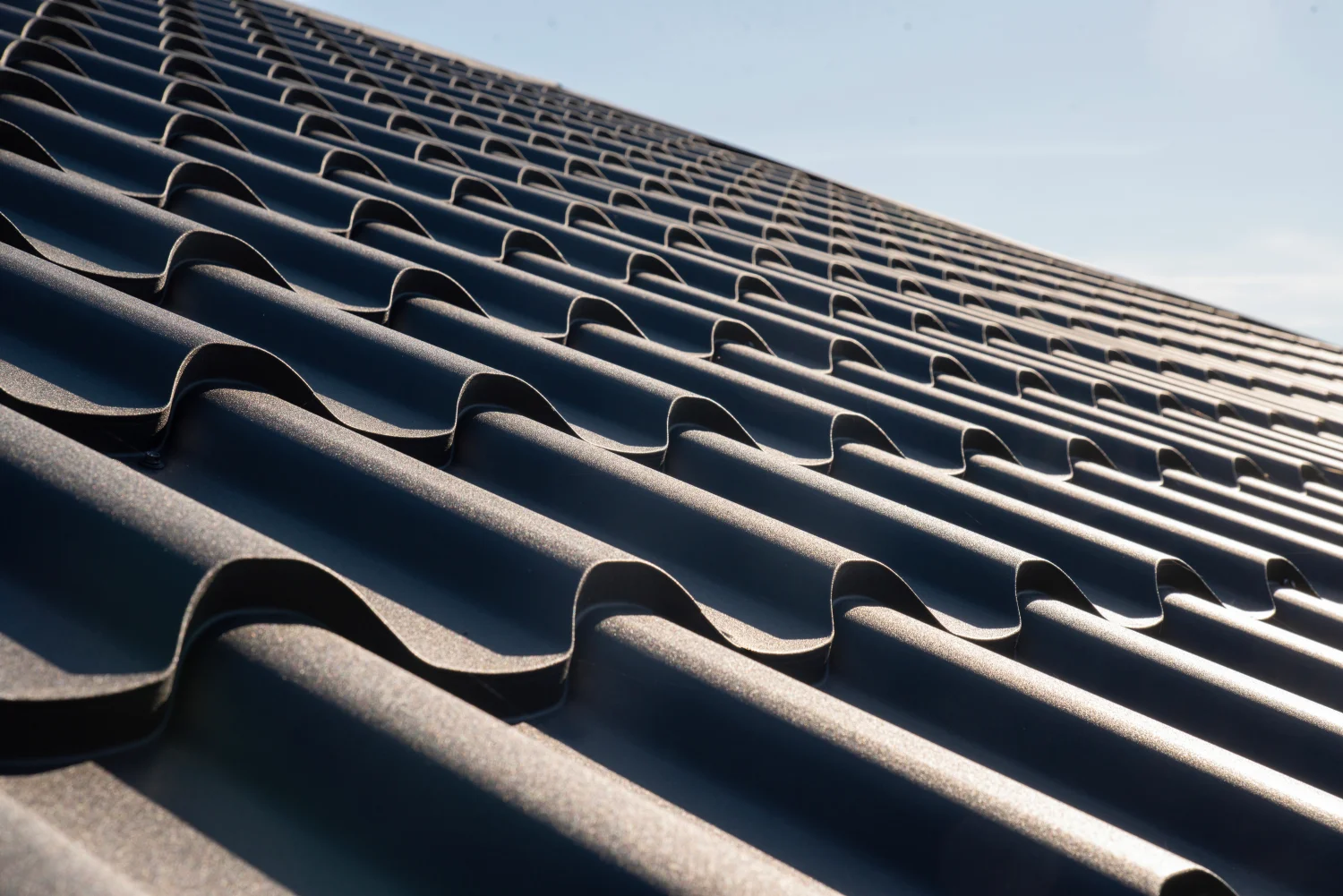
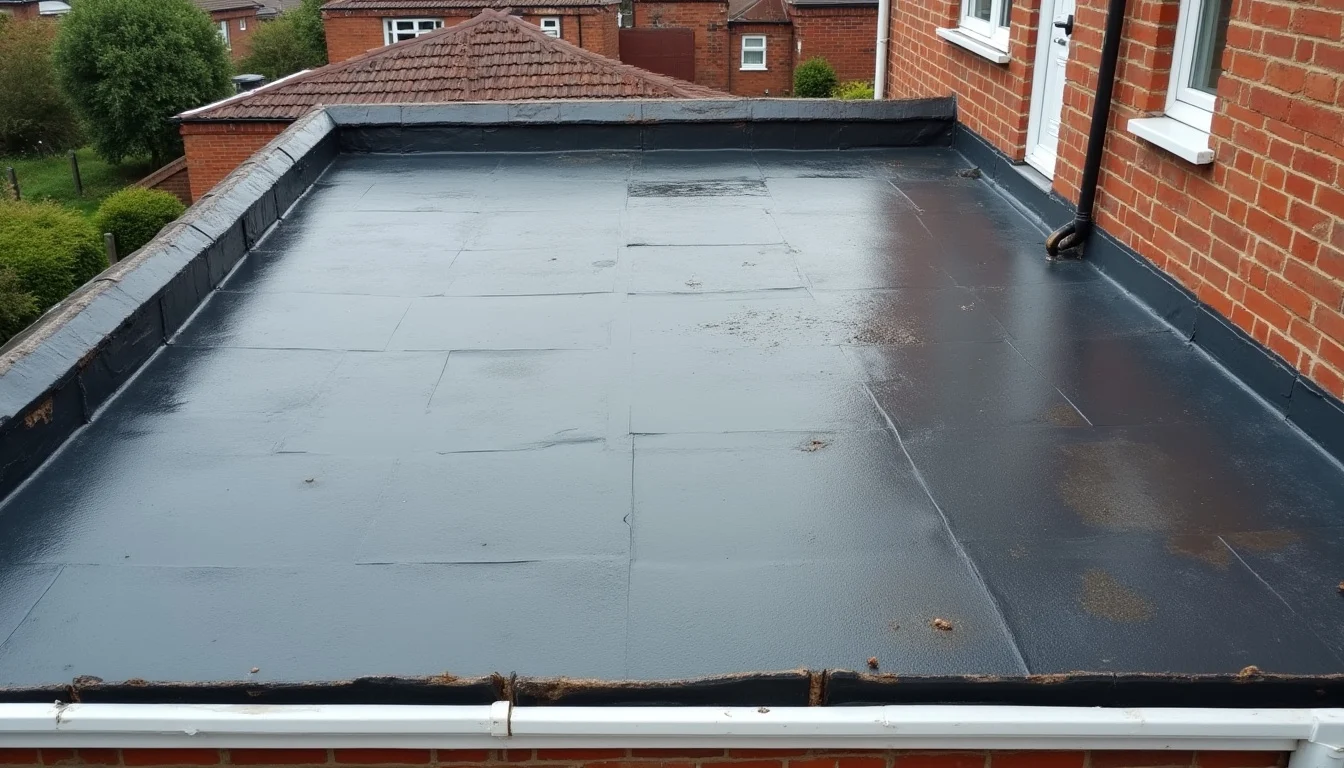
What Type of Roof Do You Have?
Please select the roof type of your property. This helps us determine the best installation method and equipment for your home.
Flat Roof
Pitched Roof
Commercial Roof
At a glance
Other problems are harder to diagnose, involve several parts of the roof or keep returning despite previous work.
The difficulty for homeowners is knowing which situation they are dealing with. A quick fix can appear attractive when water is entering the property, but repeatedly repairing the symptom without identifying the underlying cause can become expensive and frustrating.
When arranging roof repair in Worthing, the best approach is usually determined by the complexity and condition of the roof rather than simply the size of the visible problem.
What is the difference between a general roof fix and a specialist repair?
A general roof repair normally deals with a clear, localised fault where the cause can be identified relatively easily.
Examples might include:
- Replacing an isolated broken tile
- Securing a slipped slate
- Repairing a small section of damaged felt
- Clearing debris from a drainage point
- Addressing a minor localised defect
- Replacing a visibly damaged component
A specialist repair becomes more valuable when the problem is harder to diagnose or involves a particular roofing material, junction or failure pattern.
For example, water entering around a chimney may involve flashing, masonry, tiles and drainage details working together. A recurring flat roof leak could involve the covering, roof deck, falls or an ageing previous repair.
The difference is therefore less about whether a repair is “big” or “small” and more about the level of investigation and technical understanding required.
When is a straightforward repair usually enough?
There are many situations where a simple local repair is entirely appropriate.
If one component has clearly failed while the surrounding roof remains in good condition, replacing or repairing that component may solve the problem without unnecessary additional work.
For example, a storm may damage one tile while neighbouring tiles remain secure. A small area of felt may be affected by isolated impact damage. One slate may slip even though the wider roof covering is stable.
A straightforward repair is more likely to be suitable when:
- The cause of the defect is clear
- Damage is confined to a small area
- The surrounding roof is sound
- There is little or no history of recurring leaks
- Previous repairs nearby remain secure
- No significant structural movement is visible
- Water ingress has not spread across several areas
The important point is not to make a repair more complicated than it needs to be.
A good roofing assessment should be proportionate. If a local repair will genuinely solve the issue, there should be no reason to recommend more extensive work.
What signs suggest a specialist repair may be worthwhile?
Certain patterns should prompt a more detailed investigation.
A roof repair specialist may be particularly useful when the visible defect does not explain the symptoms or when the same problem has already been addressed unsuccessfully.
Warning signs can include:
- Water returning after previous repairs
- Damp appearing away from the suspected entry point
- Several roof components deteriorating together
- Damage around chimneys, valleys or roof junctions
- Widespread movement in tiles or slates
- Repeated flat roof blistering or cracking
- Large areas of ponding water
- Several old patches across the same roof
- Difficult-to-access defects
- Uncertainty about whether repair or replacement offers better value
These situations require more than simply covering a visible opening.
The roofer may need to trace where water is travelling, inspect neighbouring materials and determine whether the apparent defect is the cause or merely one symptom of a wider problem.
Which roofing problems often need more detailed investigation?
Some areas of a roof naturally involve more components and therefore require more careful diagnosis.
|
Roofing problem |
Why it can be complex |
What may need checking |
|
Chimney leak |
Several roof and masonry junctions meet |
Flashing, mortar, tiles, back gutters |
|
Recurring flat roof leak |
Water can travel beneath coverings |
Surface, seams, deck and drainage |
|
Repeated slipped slates |
Individual failures may share a cause |
Fixings and surrounding slates |
|
Valley leak |
Large volumes of water pass through one area |
Lining, tiles and surrounding junctions |
|
Roof edge damage |
Wind exposure can affect several components |
Fixings, coverings and edge details |
|
Persistent internal damp |
Entry point may be elsewhere |
Full route of moisture |
|
Multiple previous repairs |
Original cause may remain unresolved |
Old repairs and surrounding roof |
|
Localised sagging |
Surface symptoms may relate to structure |
Roof deck and supporting elements |
This is why the most obvious problem is not always the most important one.
A damp ceiling several metres from a chimney, for instance, does not necessarily mean water entered directly above the stain. Water may have travelled along roof timbers or beneath the covering before becoming visible indoors.
Why do some roof repairs keep failing?
Recurring failures can happen for several reasons.
One of the most common is treating the symptom instead of the source.
Imagine that water appears beneath a flat roof and a visible surface crack is patched. If the real problem is movement in the roof deck or water collecting because the roof is no longer draining correctly, the patch may eventually fail again.
Another possibility is that the original repair solved one defect while a neighbouring component was already beginning to deteriorate.
Repeated problems can therefore result from:
- Incomplete diagnosis
- Deterioration surrounding the original defect
- Incompatible repair materials
- Movement within the roof
- Poor drainage
- Ageing roof coverings
- Previous temporary repairs
- Water entering from a different location
This does not mean every failed repair was necessarily poor workmanship. Roofing systems change over time, and one component can deteriorate after another has been repaired.
What matters is recognising when repeating the same treatment is no longer the most sensible approach.
How should you compare different repair recommendations?
Receiving two different recommendations from roofers can be confusing.
One contractor might suggest a targeted repair, while another recommends opening a larger section of the roof. That does not automatically mean one is wrong.
The useful question is whether each recommendation explains:
- What the contractor believes has failed
- How they reached that conclusion
- What work they propose carrying out
- Whether surrounding areas will be inspected
- What the repair is designed to achieve
- Whether further defects could be present
- What happens if additional damage is discovered
Homeowners should feel comfortable asking why a particular method has been recommended.
A clear explanation is especially important when more extensive work is proposed. You should understand why a small repair is unlikely to provide the same result.
Does specialist automatically mean more expensive?
Not necessarily.
Specialist diagnosis may sometimes lead to a more involved repair, but it can also prevent unnecessary work.
Consider a recurring leak that has already received several temporary patches. Continuing to pay for individual fixes could eventually cost more than identifying and correcting the underlying defect properly.
Conversely, a detailed inspection might confirm that the problem is genuinely localised and only requires a small repair.
The objective should therefore be value rather than simply the lowest initial price.
When comparing options for roof repair in Worthing, consider:
- Whether the cause has been clearly identified
- How likely the proposed repair is to last
- The condition of neighbouring roof components
- Whether the same area has failed previously
- Whether additional work is genuinely necessary
- The consequences of delaying the correct repair
Price matters, but the cheapest quotation is not automatically the best value if the underlying problem remains unresolved.
How can you tell whether a roofing company has investigated properly?
Homeowners do not need technical roofing knowledge to ask sensible questions.
After an inspection, a contractor should generally be able to explain what they found in straightforward language.
Useful information might include:
- Where the suspected defect is located
- Whether the issue appears localised
- The condition of surrounding materials
- Why water is entering the property
- Whether previous repairs are contributing
- What repair options are available
- Whether any further investigation is needed
Photographs can also be helpful when the defect is somewhere the homeowner cannot safely see.
Be cautious of conclusions reached without looking at enough of the roof to support them. Equally, complicated terminology should not be used to make a straightforward repair sound unnecessarily technical.
A good assessment should make the decision clearer, not more confusing.
When should replacement be discussed instead of another repair?
Specialist repair does not mean repeatedly repairing a roof indefinitely.
There comes a point where widespread deterioration can make further local repairs less worthwhile.
Replacement may deserve consideration when:
- Large areas of roof covering have deteriorated
- Problems are occurring across several sections
- Repairs are becoming increasingly frequent
- Supporting materials have been affected
- The roof has several interconnected defects
- Continued repair costs are becoming disproportionate
However, age alone should not determine the recommendation.
An older roof in generally good condition may still be perfectly suitable for repair. A newer roof can develop problems that require more substantial work if defects are widespread.
A responsible roof repair specialist should therefore assess condition rather than assume replacement based solely on age or appearance.
Can homeowners diagnose the problem themselves?
You can often collect useful information safely.
Note when the problem occurs, such as during prolonged rain, wind-driven rain or immediately after a storm. Look for visible defects from ground level and check the loft for damp or staining if it is safely accessible.
Useful details include:
- When the leak first appeared
- Whether it happens every time it rains
- Whether the area has been repaired previously
- Whether the stain is growing
- Any visible external damage
- Photographs of internal damp
Avoid climbing onto the roof yourself. Roofing defects can make surfaces unstable, and safe access often requires appropriate equipment.
Giving this information to the roofer can help with diagnosis while keeping the investigation safe.
What Type of Roof Do You Have?
Please select the roof type of your property. This helps us determine the best installation method and equipment for your home.
Flat Roof
Pitched Roof
It just takes 60 Sec
And then you can book a free consultation
Choose the repair that matches the problem
The best roofing repair is not automatically the simplest option or the most extensive one. It is the repair that deals appropriately with the cause of the problem.
Straightforward damage on an otherwise healthy roof can often be resolved with targeted work. Recurring leaks, complicated junctions and multiple connected defects may require a deeper investigation before repairs begin.
For homeowners considering roof repair in Worthing, the key is understanding why the problem has developed and whether the proposed work offers a sensible long-term solution.
All Roofing Works supports homeowners throughout Worthing and the surrounding West Sussex area with roof assessments and repairs. Our team can investigate the condition of the affected area, explain what has been found and recommend work based on what the roof genuinely needs.
Related articles
What Type of Roof Do You Have?
Please select the roof type of your property. This helps us determine the best installation method and equipment for your home.
Flat Roof
Pitched Roof
Commercial Roof