Tile or Slate Damage: What the Failure Pattern Can Tell You About Your Roof
Finding a broken tile or slipped slate can naturally make you focus on that individual piece of roofing. In some cases, that is exactly where the problem starts and ends. A single tile may have been damaged by impact, or one slate may have slipped while the rest of the roof remains in good condition.

Why you can trust our content
We understand that the roofing industry can be confusing, with plenty of outdated or misleading information. That’s why we rely only on trusted, proven sources to guide our advice and installations:







At a glance
The pattern of damage can sometimes tell a much bigger story, though. Several failures in the same area, recurring problems after previous repairs or widespread movement across one roof slope can suggest that something beyond an isolated tile or slate needs attention.
For homeowners in Worthing, understanding these patterns can make it easier to know whether the roof is likely to need a straightforward repair or a more detailed inspection of the surrounding area.
What can the pattern of roof damage tell you?
Roof damage should not always be judged by the number of tiles or slates that are visibly affected.
One broken tile does not necessarily mean there is a wider roofing problem. Equally, several apparently minor defects can sometimes indicate that the roof covering, fixings or supporting elements have started to deteriorate together.
Useful questions include:
- Is the damage limited to one small area?
- Are several tiles or slates affected in a line or cluster?
- Has the same section needed repairing before?
- Are neighbouring pieces starting to move?
- Is damage concentrated around an edge, ridge or junction?
- Are there signs of moisture inside the loft?
- Has the problem appeared after particularly severe weather?
Looking at the pattern rather than only the most obvious defect gives a roofer more information about how the problem may have developed.
What Type of Roof Do You Have?
Please select the roof type of your property. This helps us determine the best installation method and equipment for your home.
Flat Roof
Pitched Roof
It just takes 60 Sec
And then you can book a free consultation
Why do tiles and slates fail in different ways?
Tiles and natural slates both create durable pitched roof coverings, but they are different materials and are fixed in different ways.
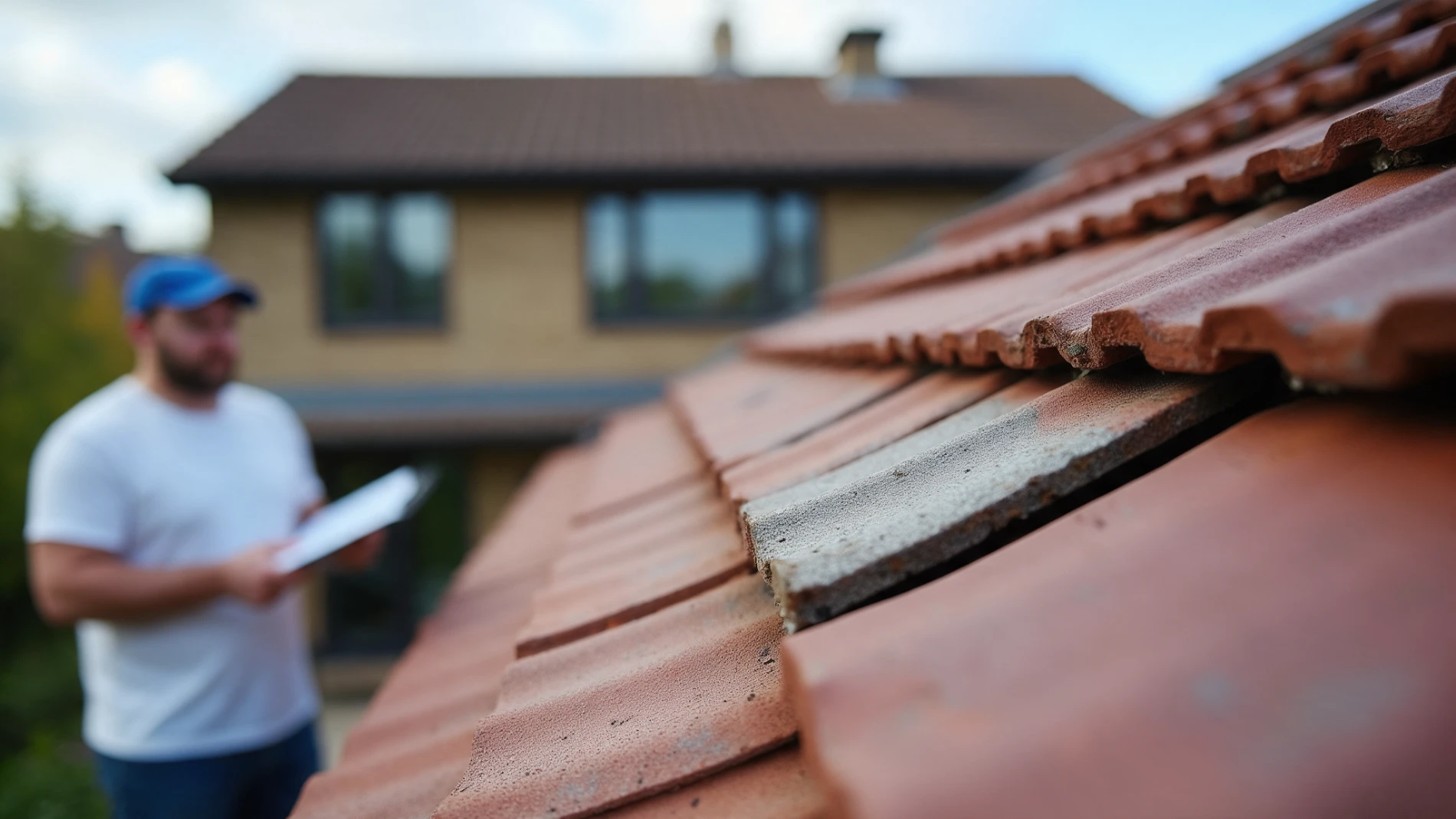
A concrete or clay tile might crack following impact, become displaced during strong winds or move if its fixing has deteriorated. Some tiles interlock with neighbouring pieces, so movement in one section can occasionally affect those around it.
Slates are thinner and individually fixed. A slate may crack, break around a fixing hole or slip when the fixing holding it in place no longer performs as intended.
The visible result can therefore look different.
A damaged tiled roof may show:
- Cracked or broken tiles
- Missing sections
- Tiles sitting out of alignment
- Movement around neighbouring pieces
- Damage concentrated around edges or ridges
A slate roof may show:
- Individual slipped slates
- Cracked or split pieces
- Empty gaps in an otherwise regular roof covering
- Several slates beginning to move in the same area
- Damage around previous repair locations
The repair method needs to take account of the roof covering rather than treating tiles and slates as interchangeable materials.
What does isolated damage usually suggest?
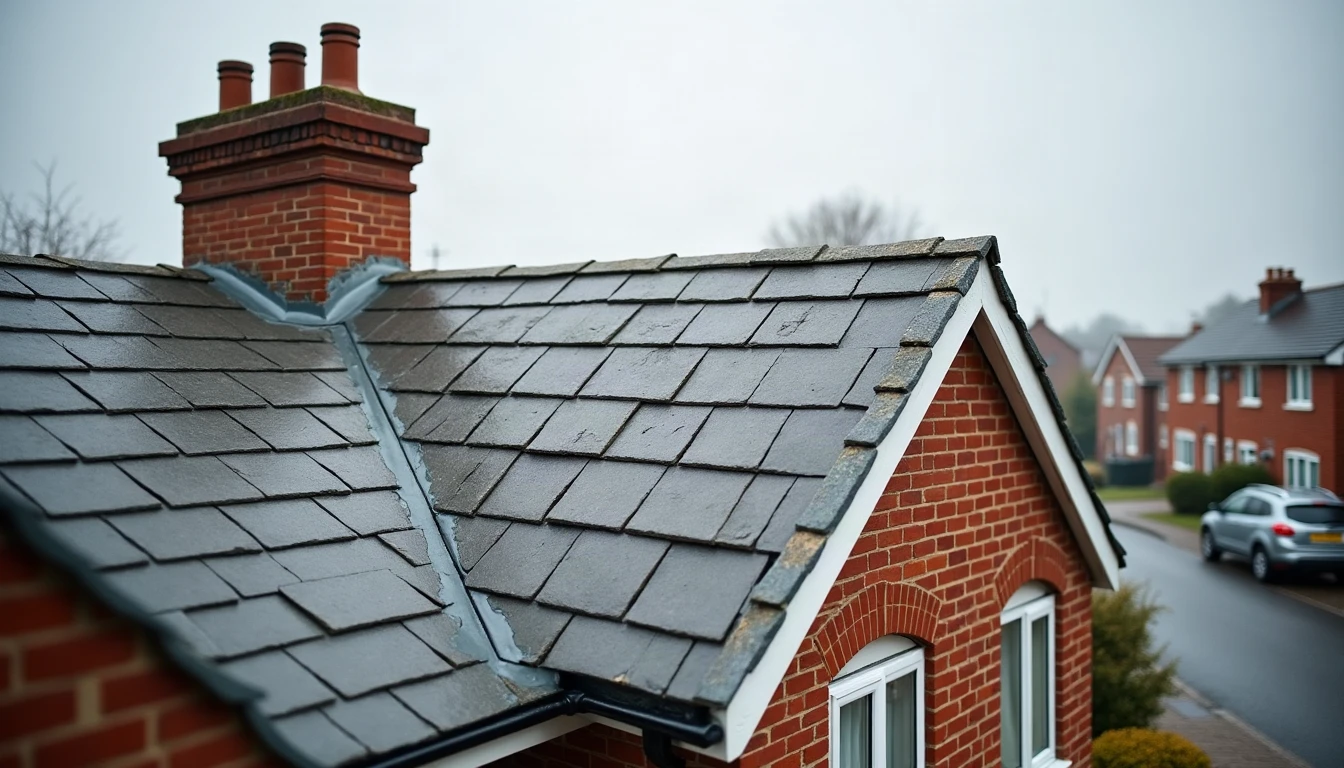
A single damaged tile or slate can sometimes be exactly that: an isolated defect.
For example, a branch or other debris might strike one section during bad weather. A contractor working elsewhere on the property may accidentally damage a tile. One slate fixing could also fail even though neighbouring sections remain secure.
Where the surrounding roof is sound, targeted tiled roof repair work may be enough to restore the affected area.
However, the surrounding pieces should still be checked.
A cracked tile may have allowed some water beneath the roof covering before the homeowner noticed it. A slipped slate may also expose an area of underlay or create a route for wind-driven rain.
A proper assessment should therefore look at both the visible damage and the area immediately around it.
When does repeated or widespread damage point to a bigger issue?
Repeated failures deserve more attention than a one-off breakage.
If several slates have slipped over a relatively short period, for instance, there may be an issue affecting more than those individual pieces. Likewise, if tiles continue to move or crack within the same part of a roof, repeatedly replacing one tile at a time may not address the reason the problem keeps returning.
Patterns that may justify a wider assessment include:
- Several failures across the same roof slope
- Repeat repairs in one area
- Multiple slipped slates
- Rows of tiles becoming uneven
- Damage occurring around the same junction
- Increasing problems after windy weather
- Water ingress despite previous repairs
- Visible deterioration across neighbouring materials
For slate roof repair, checking the condition of nearby fixings can be particularly important when several slates have begun to slip rather than just one isolated piece.
The aim is not to assume that widespread replacement is needed. It is to establish whether the visible failures share an underlying cause.
Common failure patterns and what they may mean
The following examples can help illustrate why the shape and location of damage matter.
|
Failure pattern |
Possible explanation |
What may need checking |
|
One cracked tile |
Isolated impact or local damage |
Adjacent tiles and area beneath |
|
Several broken tiles together |
Impact, movement or weather damage |
Wider section of roof covering |
|
Single slipped slate |
Individual fixing failure |
Slate and nearby fixings |
|
Multiple slipped slates |
Wider fixing deterioration or movement |
Surrounding slate field |
|
Damage near roof edge |
Greater wind exposure or fixing issue |
Edge details and neighbouring coverings |
|
Repeated repair in one spot |
Original cause may remain unresolved |
Roof covering, fixings and underlying area |
|
Uneven rows of tiles |
Movement or displacement |
Fixings, battens and surrounding roof |
|
Internal damp below damage |
Possible water ingress |
Roof covering and route of moisture |
These examples are not a substitute for an inspection, but they show why simply counting broken pieces does not always give a complete picture.
How should a roofer assess tiled or slate damage?
A roof inspection should begin by identifying the visible defect, but it should not necessarily stop there.
Where access and conditions allow, a roofer may examine:
- The damaged tile or slate
- Adjacent roof coverings
- Fixings and visible attachment points
- Ridge and edge details
- Flashings and roof junctions
- Previous repairs
- Underlay where its condition can be seen
- Roof battens where accessible
- Signs of water ingress inside the loft
- Any unusual movement or sagging
The location of the damage also matters.
A broken tile in the middle of an otherwise sound roof may be quite different from repeated failures around a chimney, valley, verge or roof edge.
Internal inspection can provide additional clues. Dampness, staining or daylight through the roof covering may help establish whether the problem is affecting more than the outer surface.
This is one reason homeowners should avoid assuming that replacing the first visibly broken piece will automatically solve an internal leak.
When is repair enough and when should wider work be considered?
A targeted repair is often appropriate when the defect is genuinely localised and the surrounding roof remains secure.
That might involve replacing one or more damaged tiles, securing slipped material or dealing with a small area of deterioration.
A tiled roof repair should nevertheless restore the integrity of the roof covering rather than simply improve its appearance. The surrounding section needs to continue directing water safely down the roof.
Wider work may deserve consideration when:
- Similar defects keep returning
- Large areas are becoming unstable
- Previous repairs are failing
- Several parts of the roof covering have deteriorated
- The supporting materials are also affected
- Water ingress is occurring through multiple locations
The decision should be based on actual condition rather than the age of the property alone.
An older roof that remains largely sound may still only require a local repair. A newer roof with installation or fixing problems could require more investigation despite its age.
Why can weather make existing weaknesses more obvious?
Roofs are designed to cope with changing weather, but wind and heavy rainfall can expose sections that are already vulnerable.
Worthing’s coastal location means properties can experience periods of exposed weather, particularly when wind-driven rain accompanies stronger conditions.
A tile that has already become slightly loose may move further. A slate with a weakened fixing may slip. Rain can then reach areas that were previously protected.
This does not necessarily mean the weather created the entire defect.
Instead, a storm may be the point at which a gradually developing weakness finally becomes noticeable.
That distinction matters because replacing the visibly damaged covering without understanding why it moved could leave the same area vulnerable again.
What can you safely check yourself?
Homeowners can often gather useful information without going onto the roof.
From ground level, you may be able to look for:
- Obvious gaps
- Tiles sitting at unusual angles
- Missing slates
- Debris that has fallen into gutters or onto the ground
- Changes to the roofline
If you have safe access to the loft, you may also notice:
- Damp patches
- Staining
- Wet insulation
- Darkened timber
- Daylight through a gap
Avoid climbing onto the roof to investigate. Pitched roofs carry significant fall risks, and damaged coverings may be less secure than they appear.
Photographs taken from a safe position can be useful when discussing the problem with a roofer.
Understand the pattern before deciding on the repair
A broken tile or slipped slate is useful evidence, but it does not always tell the whole story.
Isolated damage may need nothing more than a well-executed local repair. Repeated failures, clusters of damage or movement across a wider section can point towards something that deserves closer investigation.
For homeowners in Worthing and the surrounding West Sussex area, having the roof assessed before repeated problems develop can help separate a simple defect from a more widespread issue.
All Roofing Works can inspect tiled and slate roofs, identify the likely cause of visible damage and recommend work based on the condition of the roof rather than automatically suggesting more extensive repairs.
Related articles

What Type of Roof Do You Have?
Please select the roof type of your property. This helps us determine the best installation method and equipment for your home.
Flat Roof
Pitched Roof
Commercial Roof
At a glance
The pattern of damage can sometimes tell a much bigger story, though. Several failures in the same area, recurring problems after previous repairs or widespread movement across one roof slope can suggest that something beyond an isolated tile or slate needs attention.
For homeowners in Worthing, understanding these patterns can make it easier to know whether the roof is likely to need a straightforward repair or a more detailed inspection of the surrounding area.
What can the pattern of roof damage tell you?
Roof damage should not always be judged by the number of tiles or slates that are visibly affected.
One broken tile does not necessarily mean there is a wider roofing problem. Equally, several apparently minor defects can sometimes indicate that the roof covering, fixings or supporting elements have started to deteriorate together.
Useful questions include:
- Is the damage limited to one small area?
- Are several tiles or slates affected in a line or cluster?
- Has the same section needed repairing before?
- Are neighbouring pieces starting to move?
- Is damage concentrated around an edge, ridge or junction?
- Are there signs of moisture inside the loft?
- Has the problem appeared after particularly severe weather?
Looking at the pattern rather than only the most obvious defect gives a roofer more information about how the problem may have developed.
What Type of Roof Do You Have?
Please select the roof type of your property. This helps us determine the best installation method and equipment for your home.
Flat Roof
Pitched Roof
It just takes 60 Sec
And then you can book a free consultation
Why do tiles and slates fail in different ways?
Tiles and natural slates both create durable pitched roof coverings, but they are different materials and are fixed in different ways.
A concrete or clay tile might crack following impact, become displaced during strong winds or move if its fixing has deteriorated. Some tiles interlock with neighbouring pieces, so movement in one section can occasionally affect those around it.
Slates are thinner and individually fixed. A slate may crack, break around a fixing hole or slip when the fixing holding it in place no longer performs as intended.
The visible result can therefore look different.
A damaged tiled roof may show:
- Cracked or broken tiles
- Missing sections
- Tiles sitting out of alignment
- Movement around neighbouring pieces
- Damage concentrated around edges or ridges
A slate roof may show:
- Individual slipped slates
- Cracked or split pieces
- Empty gaps in an otherwise regular roof covering
- Several slates beginning to move in the same area
- Damage around previous repair locations
The repair method needs to take account of the roof covering rather than treating tiles and slates as interchangeable materials.
What does isolated damage usually suggest?
A single damaged tile or slate can sometimes be exactly that: an isolated defect.
For example, a branch or other debris might strike one section during bad weather. A contractor working elsewhere on the property may accidentally damage a tile. One slate fixing could also fail even though neighbouring sections remain secure.
Where the surrounding roof is sound, targeted tiled roof repair work may be enough to restore the affected area.
However, the surrounding pieces should still be checked.
A cracked tile may have allowed some water beneath the roof covering before the homeowner noticed it. A slipped slate may also expose an area of underlay or create a route for wind-driven rain.
A proper assessment should therefore look at both the visible damage and the area immediately around it.
When does repeated or widespread damage point to a bigger issue?
Repeated failures deserve more attention than a one-off breakage.
If several slates have slipped over a relatively short period, for instance, there may be an issue affecting more than those individual pieces. Likewise, if tiles continue to move or crack within the same part of a roof, repeatedly replacing one tile at a time may not address the reason the problem keeps returning.
Patterns that may justify a wider assessment include:
- Several failures across the same roof slope
- Repeat repairs in one area
- Multiple slipped slates
- Rows of tiles becoming uneven
- Damage occurring around the same junction
- Increasing problems after windy weather
- Water ingress despite previous repairs
- Visible deterioration across neighbouring materials
For slate roof repair, checking the condition of nearby fixings can be particularly important when several slates have begun to slip rather than just one isolated piece.
The aim is not to assume that widespread replacement is needed. It is to establish whether the visible failures share an underlying cause.
Common failure patterns and what they may mean
The following examples can help illustrate why the shape and location of damage matter.
|
Failure pattern |
Possible explanation |
What may need checking |
|
One cracked tile |
Isolated impact or local damage |
Adjacent tiles and area beneath |
|
Several broken tiles together |
Impact, movement or weather damage |
Wider section of roof covering |
|
Single slipped slate |
Individual fixing failure |
Slate and nearby fixings |
|
Multiple slipped slates |
Wider fixing deterioration or movement |
Surrounding slate field |
|
Damage near roof edge |
Greater wind exposure or fixing issue |
Edge details and neighbouring coverings |
|
Repeated repair in one spot |
Original cause may remain unresolved |
Roof covering, fixings and underlying area |
|
Uneven rows of tiles |
Movement or displacement |
Fixings, battens and surrounding roof |
|
Internal damp below damage |
Possible water ingress |
Roof covering and route of moisture |
These examples are not a substitute for an inspection, but they show why simply counting broken pieces does not always give a complete picture.
How should a roofer assess tiled or slate damage?
A roof inspection should begin by identifying the visible defect, but it should not necessarily stop there.
Where access and conditions allow, a roofer may examine:
- The damaged tile or slate
- Adjacent roof coverings
- Fixings and visible attachment points
- Ridge and edge details
- Flashings and roof junctions
- Previous repairs
- Underlay where its condition can be seen
- Roof battens where accessible
- Signs of water ingress inside the loft
- Any unusual movement or sagging
The location of the damage also matters.
A broken tile in the middle of an otherwise sound roof may be quite different from repeated failures around a chimney, valley, verge or roof edge.
Internal inspection can provide additional clues. Dampness, staining or daylight through the roof covering may help establish whether the problem is affecting more than the outer surface.
This is one reason homeowners should avoid assuming that replacing the first visibly broken piece will automatically solve an internal leak.
When is repair enough and when should wider work be considered?
A targeted repair is often appropriate when the defect is genuinely localised and the surrounding roof remains secure.
That might involve replacing one or more damaged tiles, securing slipped material or dealing with a small area of deterioration.
A tiled roof repair should nevertheless restore the integrity of the roof covering rather than simply improve its appearance. The surrounding section needs to continue directing water safely down the roof.
Wider work may deserve consideration when:
- Similar defects keep returning
- Large areas are becoming unstable
- Previous repairs are failing
- Several parts of the roof covering have deteriorated
- The supporting materials are also affected
- Water ingress is occurring through multiple locations
The decision should be based on actual condition rather than the age of the property alone.
An older roof that remains largely sound may still only require a local repair. A newer roof with installation or fixing problems could require more investigation despite its age.
Why can weather make existing weaknesses more obvious?
Roofs are designed to cope with changing weather, but wind and heavy rainfall can expose sections that are already vulnerable.
Worthing’s coastal location means properties can experience periods of exposed weather, particularly when wind-driven rain accompanies stronger conditions.
A tile that has already become slightly loose may move further. A slate with a weakened fixing may slip. Rain can then reach areas that were previously protected.
This does not necessarily mean the weather created the entire defect.
Instead, a storm may be the point at which a gradually developing weakness finally becomes noticeable.
That distinction matters because replacing the visibly damaged covering without understanding why it moved could leave the same area vulnerable again.
What can you safely check yourself?
Homeowners can often gather useful information without going onto the roof.
From ground level, you may be able to look for:
- Obvious gaps
- Tiles sitting at unusual angles
- Missing slates
- Debris that has fallen into gutters or onto the ground
- Changes to the roofline
If you have safe access to the loft, you may also notice:
- Damp patches
- Staining
- Wet insulation
- Darkened timber
- Daylight through a gap
Avoid climbing onto the roof to investigate. Pitched roofs carry significant fall risks, and damaged coverings may be less secure than they appear.
Photographs taken from a safe position can be useful when discussing the problem with a roofer.
Understand the pattern before deciding on the repair
A broken tile or slipped slate is useful evidence, but it does not always tell the whole story.
Isolated damage may need nothing more than a well-executed local repair. Repeated failures, clusters of damage or movement across a wider section can point towards something that deserves closer investigation.
For homeowners in Worthing and the surrounding West Sussex area, having the roof assessed before repeated problems develop can help separate a simple defect from a more widespread issue.
All Roofing Works can inspect tiled and slate roofs, identify the likely cause of visible damage and recommend work based on the condition of the roof rather than automatically suggesting more extensive repairs.
Related articles
What Type of Roof Do You Have?
Please select the roof type of your property. This helps us determine the best installation method and equipment for your home.
Flat Roof
Pitched Roof
Commercial Roof