Ponding, Cracks or Blisters: When Flat and Garage Roof Problems Need Attention
The difficulty is knowing which signs are simply worth monitoring and which may indicate that part of the roof is beginning to fail. Flat roofs rely on the roof covering, joints, upstands, drainage and underlying structure working together. When one area deteriorates, the first symptom may be subtle. For homeowners in Worthing, recognising these warning…

Why you can trust our content
We understand that the roofing industry can be confusing, with plenty of outdated or misleading information. That’s why we rely only on trusted, proven sources to guide our advice and installations:






At a glance
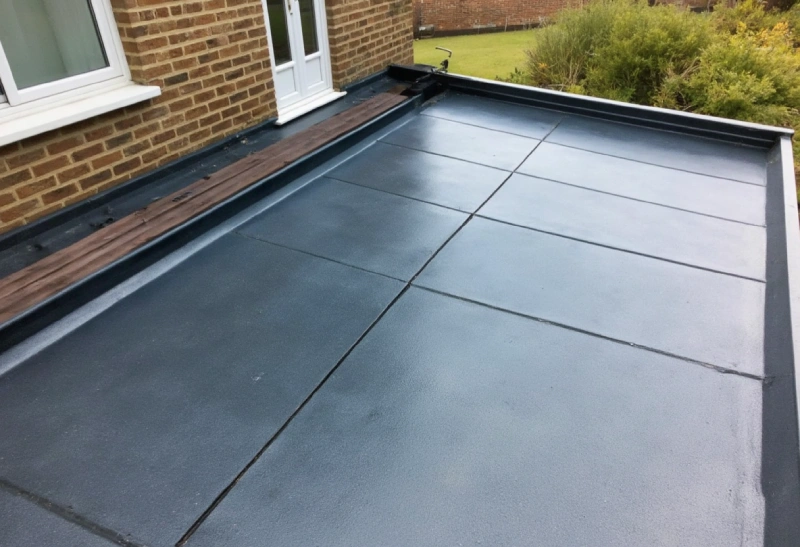
The difficulty is knowing which signs are simply worth monitoring and which may indicate that part of the roof is beginning to fail. Flat roofs rely on the roof covering, joints, upstands, drainage and underlying structure working together. When one area deteriorates, the first symptom may be subtle.
For homeowners in Worthing, recognising these warning signs early can make it easier to arrange proportionate repairs before a small defect becomes a more disruptive problem.
Why does water sometimes sit on a flat roof?
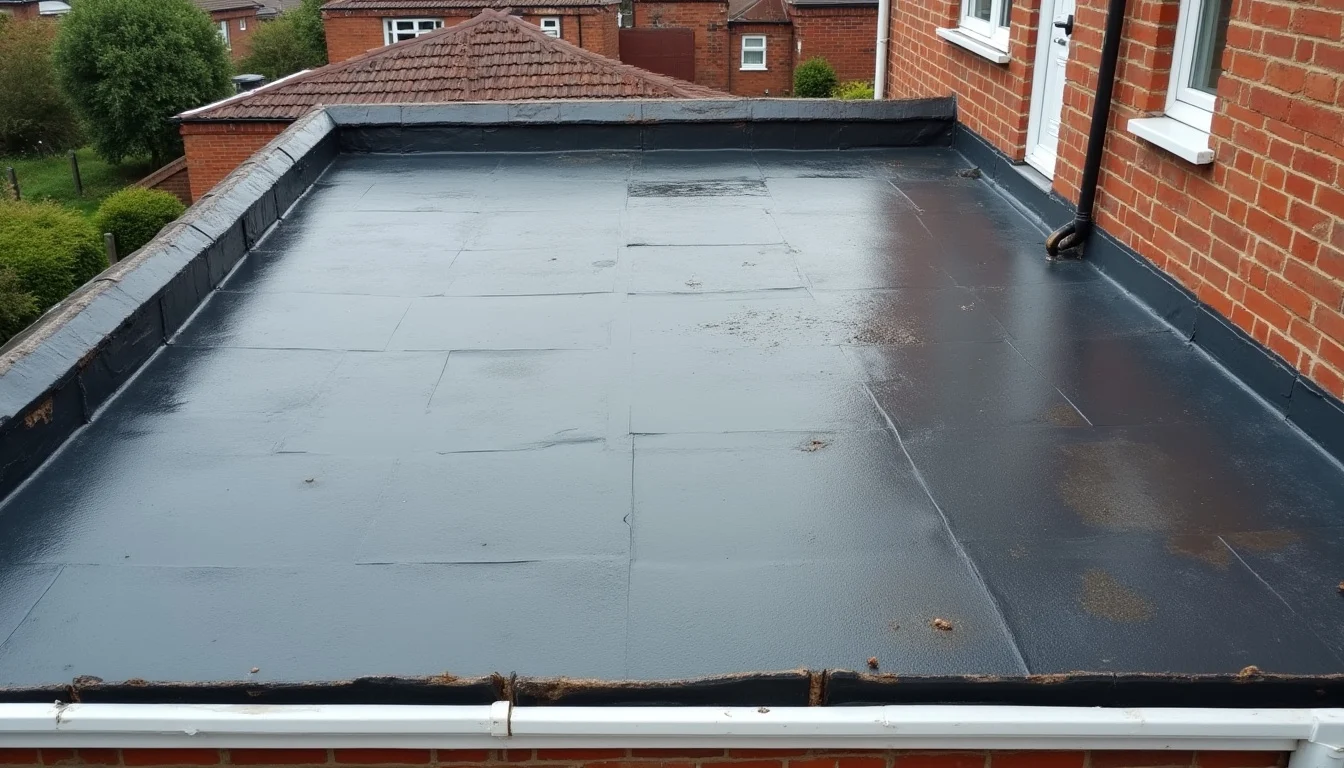
Despite the name, a flat roof should normally have a slight fall that encourages rainwater towards an outlet, gutter or drainage point.
If water remains on the surface for an extended period after rain, this is often described as ponding.
A small amount of temporary surface water immediately after rainfall does not automatically mean the roof has failed. The concern increases when the same areas remain wet for long periods or when pools of water appear to be getting deeper.
Possible causes can include:
- Poorly designed or insufficient falls
- Blocked drainage outlets
- Debris preventing water from moving freely
- Localised sagging
- Movement within the roof deck
- Settlement over time
- Raised previous repairs disrupting drainage
- Deterioration beneath the roof covering
Repeated ponding places additional strain on the affected section and can make existing weaknesses more noticeable.
If you are considering flat roof repair in Worthing, the important question is not simply whether water is visible. It is why the water is remaining there and whether the roof beneath it is still performing properly.
What do cracks in a flat roof mean?
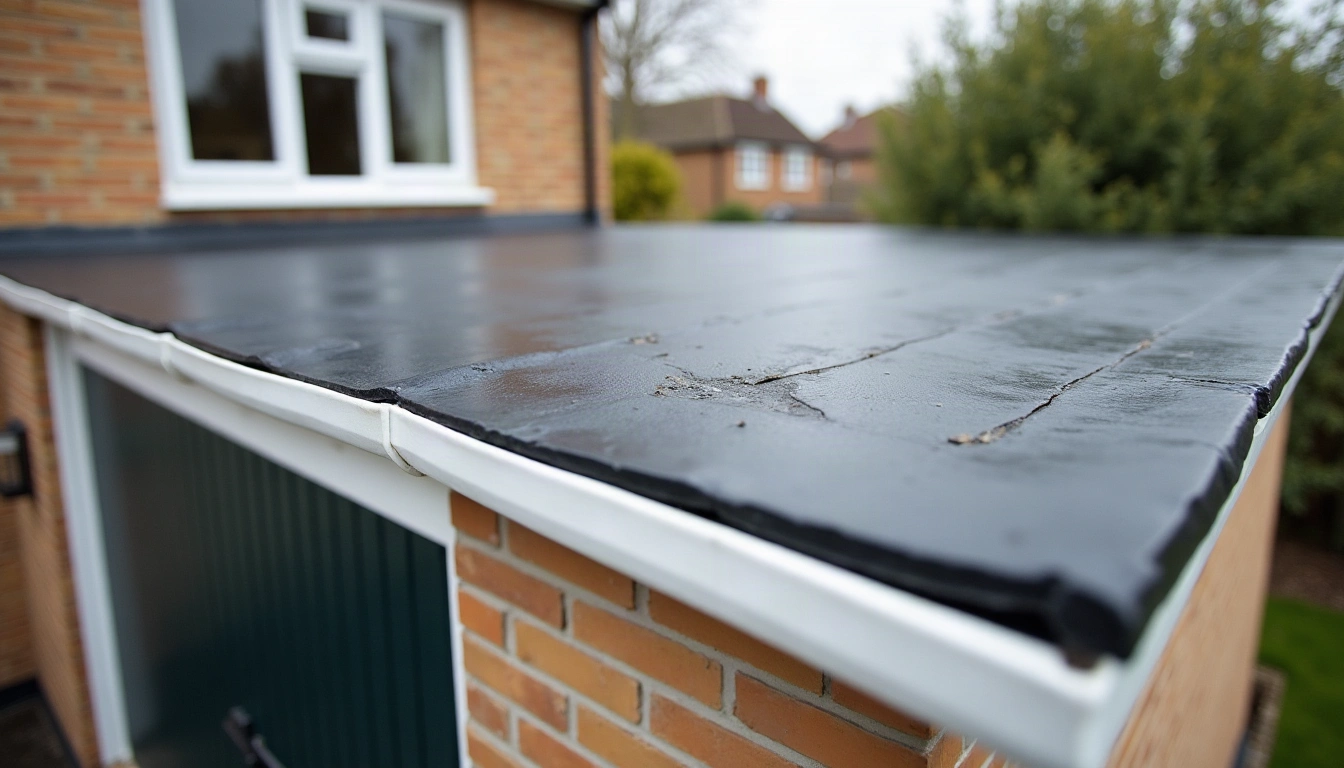
Cracks can develop for several reasons, and their significance depends on the roofing material, depth, location and wider condition of the surface.
A small surface mark may not always penetrate the full roof covering. A deeper split, particularly one that opens around a joint or roof edge, deserves more attention because it may create a route for moisture.
Cracking can sometimes be associated with:
- Ageing roofing materials
- Repeated heating and cooling
- Movement within the roof structure
- Impact damage
- Poorly detailed joints
- Previous repair areas
- General weather exposure
The position of the crack is useful information.
A split in an isolated area may suggest a local defect. Several cracks appearing across different sections can indicate that the roof covering is becoming less flexible or deteriorating more generally.
Homeowners should also avoid assuming that a dry ceiling means the crack can be ignored indefinitely. Some roof constructions include layers beneath the visible covering, meaning moisture may initially remain hidden.
What Type of Roof Do You Have?
Please select the roof type of your property. This helps us determine the best installation method and equipment for your home.
Flat Roof
Pitched Roof
It just takes 60 Sec
And then you can book a free consultation
Are blisters always a sign that the roof is leaking?
No. A blister does not automatically mean water is currently entering the property.
Blisters are raised areas where the roof covering has separated from the layer beneath it. Air or moisture can sometimes become trapped between roofing layers, creating a visible bubble in the surface.
Some blisters remain stable for long periods. Others become more vulnerable if they are exposed to movement, foot traffic or changing temperatures.
The condition deserves closer attention if:
- The blister is increasing in size
- The surface has started splitting
- Several blisters are appearing
- Water is collecting around the raised area
- The surrounding roof feels soft or unstable
- There are signs of damp inside the building
A blister that has cracked can be more problematic because the protective surface of the roof may no longer be continuous.
The wider context therefore matters. One small stable blister on an otherwise sound roof is very different from widespread blistering combined with cracking and ponding.
What can different flat roof symptoms tell you?
Looking at symptoms together can provide a clearer picture than considering each problem separately.
|
What you notice |
Possible issue |
What should be checked |
|
Water remaining after rain |
Drainage or roof fall problem |
Outlets, gutters and surface level |
|
One isolated crack |
Local movement or damage |
Depth of crack and surrounding material |
|
Several cracks |
Wider deterioration |
General condition of roof covering |
|
Small stable blister |
Trapped air or moisture |
Size and surrounding surface |
|
Split blister |
Possible opening in roof covering |
Area beneath and nearby material |
|
Soft or spongy area |
Possible moisture beneath surface |
Roof covering and underlying deck |
|
Sagging section |
Structural or deck movement |
Supporting construction |
|
Failed old patch |
Previous repair has deteriorated |
Original defect and surrounding roof |
|
Damp ceiling below |
Potential water ingress |
Full route from roof to interior |
These signs do not automatically dictate the repair. They help identify what should be investigated.
That is particularly important with a garage roof repair, where the roof may be less frequently inspected than the main house roof and deterioration can develop unnoticed.
When does a garage roof problem need professional attention?
Garages, extensions, porches and outbuildings commonly use flat or low-pitched roofing systems. Because these areas are not always occupied every day, early warning signs can be easier to miss.
A homeowner may only notice there is a problem when stored belongings become damp, staining appears on the ceiling or water starts dripping during heavy rainfall.
Professional attention is sensible when you notice:
- Persistent leaks
- Significant surface cracking
- Loose or lifting edges
- Repeated ponding
- Large or split blisters
- Sagging areas
- Soft sections underfoot
- Recurring problems despite previous repairs
- Damp timber or internal finishes
It is also worth arranging an assessment when several symptoms appear together.
For example, ponding combined with cracking may indicate a different problem from one isolated surface crack. Similarly, a blister sitting within an area that regularly holds water deserves a closer look than a small raised section on an otherwise dry roof.
Can a local repair solve the problem?
Often, yes.
A flat roof does not necessarily need replacing because one small defect has developed.
If the surrounding roof remains sound, a targeted repair may be sufficient. Depending on the material and condition, the work could involve repairing a local split, addressing a defective joint, dealing with an edge detail or resolving a drainage problem.
The suitability of flat roof repair in Worthing depends on several factors:
- The size of the affected area
- The condition of the surrounding roof covering
- Whether moisture has reached the layers beneath
- How many previous repairs have been made
- Whether the roof drains correctly
- Whether deterioration is isolated or widespread
The objective should be to deal with the cause of the problem rather than simply hide the visible symptom.
A patch over a crack may not last if movement beneath the roof continues. Likewise, repairing a blister may not solve anything if trapped moisture is part of a wider problem.
Why do repeated patch repairs sometimes stop being worthwhile?
A well-executed local repair can extend the useful life of a roof when the surrounding covering remains in good condition.
Problems arise when different sections begin failing one after another.
Imagine a garage roof that has already had three separate patches. Another crack then develops several feet away from the previous work. Repairing the latest defect may stop that particular leak, but it could also indicate that the original roofing material is deteriorating more widely.
At this stage, it becomes useful to compare:
- How frequently repairs are needed
- Whether each new problem occurs in a different area
- The condition of the remaining roof covering
- Whether leaks are becoming more common
- The cost of continued reactive repairs
- The expected benefit of more extensive work
This does not mean replacement should automatically be recommended after a certain number of repairs.
The decision should be based on the actual condition of the roof and whether another repair is likely to provide sensible long-term value.
A professional garage roof repair assessment should therefore consider the whole roof rather than only the latest visible problem.
How quickly should ponding, cracking or blistering be investigated?
The level of urgency depends on what is happening.
Active water ingress should be addressed promptly because continued moisture can affect ceilings, insulation, timber and stored belongings.
A small surface change without any sign of leakage may not require emergency attention, but it is still worth monitoring.
You should consider arranging an inspection sooner if:
- The affected area is worsening
- Water remains on the roof for long periods
- A blister has split
- Cracks appear to be opening
- The roof surface feels unstable
- Damp has appeared inside
- A previous repair is failing
- Bad weather is forecast and an obvious defect is present
Homeowners should avoid walking across a roof simply to inspect a suspicious area. A flat roof can still present fall risks, and a weakened roof deck may not be obvious from above.
Visual checks from a safe position are useful, but closer investigation is best carried out with suitable access and roofing experience.
What should a roofer check during an inspection?
A useful inspection should consider how the whole roof is functioning.
Depending on the roof type and access, this may include:
- Surface condition
- Cracks and splits
- Blistering
- Existing patches
- Roof edges
- Upstands
- Flashings
- Drainage outlets
- Areas of ponding
- Signs of sagging
- Junctions with adjoining walls
- Condition around penetrations
- Internal signs of moisture where accessible
The aim is to distinguish between a local defect and deterioration affecting a larger section of the roof.
This helps prevent two extremes: replacing an otherwise serviceable roof unnecessarily or repeatedly patching a roof that has begun to fail across several areas.
Small surface changes can reveal a bigger roofing issue
Ponding, cracks and blisters do not all mean the same thing, and none should automatically lead to the conclusion that a whole roof needs replacing.
What matters is the pattern.
A single localised defect on an otherwise healthy roof may need a straightforward repair. Several symptoms appearing together, recurring leaks or repeated failures across different sections can indicate that the roof deserves a broader assessment.
For homeowners considering flat roof repair in Worthing, understanding the cause first can help avoid unnecessary work while reducing the risk of small defects becoming larger problems.
All Roofing Works supports homeowners across Worthing and the wider West Sussex area with flat, garage and general roofing repairs. Our team can assess the condition of the roof and recommend work based on what is actually needed.
Related articles

What Type of Roof Do You Have?
Please select the roof type of your property. This helps us determine the best installation method and equipment for your home.
Flat Roof
Pitched Roof
Commercial Roof
At a glance
The difficulty is knowing which signs are simply worth monitoring and which may indicate that part of the roof is beginning to fail. Flat roofs rely on the roof covering, joints, upstands, drainage and underlying structure working together. When one area deteriorates, the first symptom may be subtle.
For homeowners in Worthing, recognising these warning signs early can make it easier to arrange proportionate repairs before a small defect becomes a more disruptive problem.
Why does water sometimes sit on a flat roof?
Despite the name, a flat roof should normally have a slight fall that encourages rainwater towards an outlet, gutter or drainage point.
If water remains on the surface for an extended period after rain, this is often described as ponding.
A small amount of temporary surface water immediately after rainfall does not automatically mean the roof has failed. The concern increases when the same areas remain wet for long periods or when pools of water appear to be getting deeper.
Possible causes can include:
- Poorly designed or insufficient falls
- Blocked drainage outlets
- Debris preventing water from moving freely
- Localised sagging
- Movement within the roof deck
- Settlement over time
- Raised previous repairs disrupting drainage
- Deterioration beneath the roof covering
Repeated ponding places additional strain on the affected section and can make existing weaknesses more noticeable.
If you are considering flat roof repair in Worthing, the important question is not simply whether water is visible. It is why the water is remaining there and whether the roof beneath it is still performing properly.
What do cracks in a flat roof mean?
Cracks can develop for several reasons, and their significance depends on the roofing material, depth, location and wider condition of the surface.
A small surface mark may not always penetrate the full roof covering. A deeper split, particularly one that opens around a joint or roof edge, deserves more attention because it may create a route for moisture.
Cracking can sometimes be associated with:
- Ageing roofing materials
- Repeated heating and cooling
- Movement within the roof structure
- Impact damage
- Poorly detailed joints
- Previous repair areas
- General weather exposure
The position of the crack is useful information.
A split in an isolated area may suggest a local defect. Several cracks appearing across different sections can indicate that the roof covering is becoming less flexible or deteriorating more generally.
Homeowners should also avoid assuming that a dry ceiling means the crack can be ignored indefinitely. Some roof constructions include layers beneath the visible covering, meaning moisture may initially remain hidden.
What Type of Roof Do You Have?
Please select the roof type of your property. This helps us determine the best installation method and equipment for your home.
Flat Roof
Pitched Roof
It just takes 60 Sec
And then you can book a free consultation
Are blisters always a sign that the roof is leaking?
No. A blister does not automatically mean water is currently entering the property.
Blisters are raised areas where the roof covering has separated from the layer beneath it. Air or moisture can sometimes become trapped between roofing layers, creating a visible bubble in the surface.
Some blisters remain stable for long periods. Others become more vulnerable if they are exposed to movement, foot traffic or changing temperatures.
The condition deserves closer attention if:
- The blister is increasing in size
- The surface has started splitting
- Several blisters are appearing
- Water is collecting around the raised area
- The surrounding roof feels soft or unstable
- There are signs of damp inside the building
A blister that has cracked can be more problematic because the protective surface of the roof may no longer be continuous.
The wider context therefore matters. One small stable blister on an otherwise sound roof is very different from widespread blistering combined with cracking and ponding.
What can different flat roof symptoms tell you?
Looking at symptoms together can provide a clearer picture than considering each problem separately.
|
What you notice |
Possible issue |
What should be checked |
|
Water remaining after rain |
Drainage or roof fall problem |
Outlets, gutters and surface level |
|
One isolated crack |
Local movement or damage |
Depth of crack and surrounding material |
|
Several cracks |
Wider deterioration |
General condition of roof covering |
|
Small stable blister |
Trapped air or moisture |
Size and surrounding surface |
|
Split blister |
Possible opening in roof covering |
Area beneath and nearby material |
|
Soft or spongy area |
Possible moisture beneath surface |
Roof covering and underlying deck |
|
Sagging section |
Structural or deck movement |
Supporting construction |
|
Failed old patch |
Previous repair has deteriorated |
Original defect and surrounding roof |
|
Damp ceiling below |
Potential water ingress |
Full route from roof to interior |
These signs do not automatically dictate the repair. They help identify what should be investigated.
That is particularly important with a garage roof repair, where the roof may be less frequently inspected than the main house roof and deterioration can develop unnoticed.
When does a garage roof problem need professional attention?
Garages, extensions, porches and outbuildings commonly use flat or low-pitched roofing systems. Because these areas are not always occupied every day, early warning signs can be easier to miss.
A homeowner may only notice there is a problem when stored belongings become damp, staining appears on the ceiling or water starts dripping during heavy rainfall.
Professional attention is sensible when you notice:
- Persistent leaks
- Significant surface cracking
- Loose or lifting edges
- Repeated ponding
- Large or split blisters
- Sagging areas
- Soft sections underfoot
- Recurring problems despite previous repairs
- Damp timber or internal finishes
It is also worth arranging an assessment when several symptoms appear together.
For example, ponding combined with cracking may indicate a different problem from one isolated surface crack. Similarly, a blister sitting within an area that regularly holds water deserves a closer look than a small raised section on an otherwise dry roof.
Can a local repair solve the problem?
Often, yes.
A flat roof does not necessarily need replacing because one small defect has developed.
If the surrounding roof remains sound, a targeted repair may be sufficient. Depending on the material and condition, the work could involve repairing a local split, addressing a defective joint, dealing with an edge detail or resolving a drainage problem.
The suitability of flat roof repair in Worthing depends on several factors:
- The size of the affected area
- The condition of the surrounding roof covering
- Whether moisture has reached the layers beneath
- How many previous repairs have been made
- Whether the roof drains correctly
- Whether deterioration is isolated or widespread
The objective should be to deal with the cause of the problem rather than simply hide the visible symptom.
A patch over a crack may not last if movement beneath the roof continues. Likewise, repairing a blister may not solve anything if trapped moisture is part of a wider problem.
Why do repeated patch repairs sometimes stop being worthwhile?
A well-executed local repair can extend the useful life of a roof when the surrounding covering remains in good condition.
Problems arise when different sections begin failing one after another.
Imagine a garage roof that has already had three separate patches. Another crack then develops several feet away from the previous work. Repairing the latest defect may stop that particular leak, but it could also indicate that the original roofing material is deteriorating more widely.
At this stage, it becomes useful to compare:
- How frequently repairs are needed
- Whether each new problem occurs in a different area
- The condition of the remaining roof covering
- Whether leaks are becoming more common
- The cost of continued reactive repairs
- The expected benefit of more extensive work
This does not mean replacement should automatically be recommended after a certain number of repairs.
The decision should be based on the actual condition of the roof and whether another repair is likely to provide sensible long-term value.
A professional garage roof repair assessment should therefore consider the whole roof rather than only the latest visible problem.
How quickly should ponding, cracking or blistering be investigated?
The level of urgency depends on what is happening.
Active water ingress should be addressed promptly because continued moisture can affect ceilings, insulation, timber and stored belongings.
A small surface change without any sign of leakage may not require emergency attention, but it is still worth monitoring.
You should consider arranging an inspection sooner if:
- The affected area is worsening
- Water remains on the roof for long periods
- A blister has split
- Cracks appear to be opening
- The roof surface feels unstable
- Damp has appeared inside
- A previous repair is failing
- Bad weather is forecast and an obvious defect is present
Homeowners should avoid walking across a roof simply to inspect a suspicious area. A flat roof can still present fall risks, and a weakened roof deck may not be obvious from above.
Visual checks from a safe position are useful, but closer investigation is best carried out with suitable access and roofing experience.
What should a roofer check during an inspection?
A useful inspection should consider how the whole roof is functioning.
Depending on the roof type and access, this may include:
- Surface condition
- Cracks and splits
- Blistering
- Existing patches
- Roof edges
- Upstands
- Flashings
- Drainage outlets
- Areas of ponding
- Signs of sagging
- Junctions with adjoining walls
- Condition around penetrations
- Internal signs of moisture where accessible
The aim is to distinguish between a local defect and deterioration affecting a larger section of the roof.
This helps prevent two extremes: replacing an otherwise serviceable roof unnecessarily or repeatedly patching a roof that has begun to fail across several areas.
Small surface changes can reveal a bigger roofing issue
Ponding, cracks and blisters do not all mean the same thing, and none should automatically lead to the conclusion that a whole roof needs replacing.
What matters is the pattern.
A single localised defect on an otherwise healthy roof may need a straightforward repair. Several symptoms appearing together, recurring leaks or repeated failures across different sections can indicate that the roof deserves a broader assessment.
For homeowners considering flat roof repair in Worthing, understanding the cause first can help avoid unnecessary work while reducing the risk of small defects becoming larger problems.
All Roofing Works supports homeowners across Worthing and the wider West Sussex area with flat, garage and general roofing repairs. Our team can assess the condition of the roof and recommend work based on what is actually needed.
Related articles
What Type of Roof Do You Have?
Please select the roof type of your property. This helps us determine the best installation method and equipment for your home.
Flat Roof
Pitched Roof
Commercial Roof