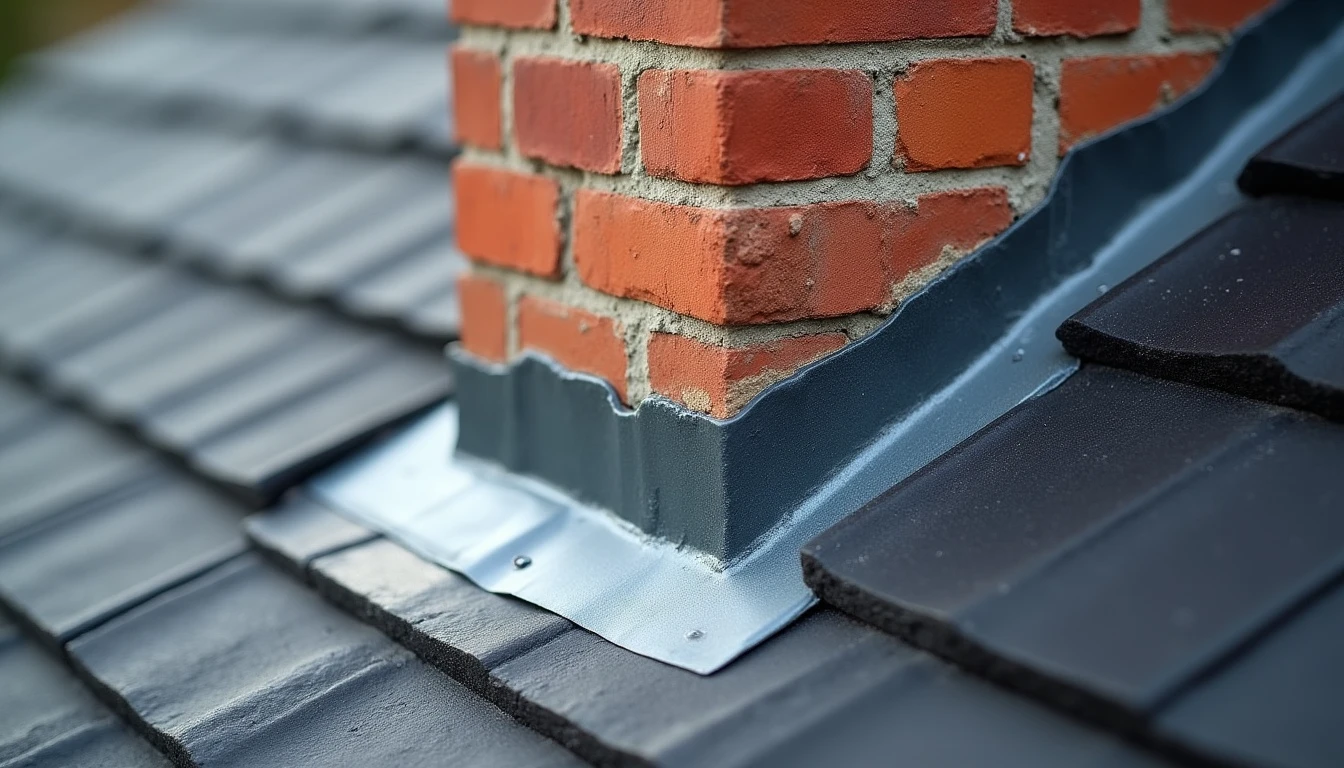
How Chimney Junctions Can Cause Hidden Damage Beneath Tiled Roofs
Chimney junctions are one of the most common weak points on a tiled roof, and water damage there often stays hidden until it reaches the ceiling below.

Why you can trust our content
We understand that the roofing industry can be confusing, with plenty of outdated or misleading information. That’s why we rely only on trusted, proven sources to guide our advice and installations:






At a glance
This guide explains how flashing failures and worn joints let moisture in unseen, and what to look for before a small defect becomes a costly repair.
Introduction
A chimney can be one of the most vulnerable points on a tiled roof. Where the chimney meets the roof covering, several different materials and junctions have to work together to keep rainwater out. When one part begins to fail, water can travel beneath the tiles and cause damage that is not immediately visible from inside the property.
This is why a small-looking issue around a chimney should not automatically be treated as a simple cosmetic repair. Understanding how chimney junctions work, what commonly goes wrong and how damage develops can help Worthing homeowners make better decisions about maintenance and repairs.
Why are chimney junctions particularly vulnerable?
The junction between a chimney and tiled roof has to deal with constant exposure to rain, wind and temperature changes. It also brings together masonry, tiles, flashing and, in some cases, mortar joints or sealants.
Common problems include:
- Deteriorated or poorly installed flashing
- Cracked mortar around the chimney
- Loose or broken roof tiles
- Gaps developing at junctions
- Water tracking beneath flashing
- Damaged underlay around the chimney area
- Previous repairs that have failed or deteriorated
The important point is that water does not always appear directly below the area where it enters. It can travel along roof timbers, underlay or other materials before eventually becoming visible inside the property.
This means a damp patch on a ceiling may be several feet away from the original point of water entry.
What happens when chimney flashing starts to fail?
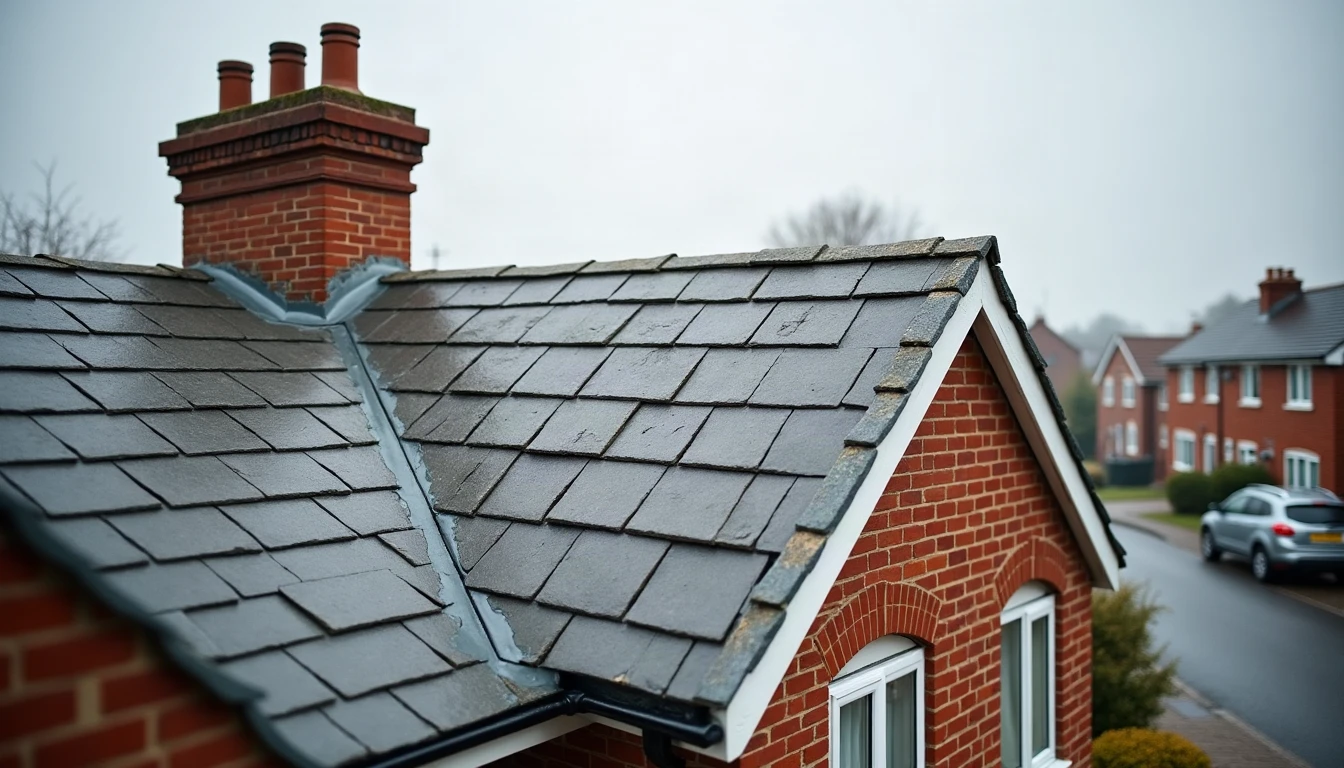
Flashing is designed to form a weather-resistant junction between the chimney and the roof. If it becomes loose, cracked, corroded or incorrectly fitted, rainwater can begin finding its way underneath.
A small gap may not cause obvious problems during every rainfall. However, repeated exposure can gradually saturate surrounding materials.
A professional chimney flashing repair should therefore look beyond the flashing itself. The condition of the surrounding tiles, mortar, underlay and roof structure can all influence whether the repair is likely to last.
Simply applying sealant over an obvious gap may provide temporary protection, but it may not address movement, deterioration or poor detailing that caused the problem in the first place.
What hidden damage can develop beneath the tiles?
Water entering around a chimney may remain concealed for some time. By the time a homeowner notices an interior stain, the affected area can be considerably larger than expected.
Potential consequences include:
|
Hidden problem |
What can happen |
|
Wet underlay |
Water can spread beneath surrounding tiles |
|
Damp timbers |
Persistent moisture may affect roof battens or rafters |
|
Damaged insulation |
Wet insulation may become less effective |
|
Timber deterioration |
Long-term moisture can contribute to decay |
|
Interior staining |
Ceilings and walls may show marks or discolouration |
|
Mould growth |
Persistent damp conditions can create suitable conditions for mould |
Not every chimney leak will result in all of these problems. The severity depends on how long water has been entering, the amount of moisture involved and how quickly the underlying issue is identified.
This is why an inspection can be more useful than judging the problem purely from what can be seen from ground level.
Can damaged tiles make a chimney leak worse?
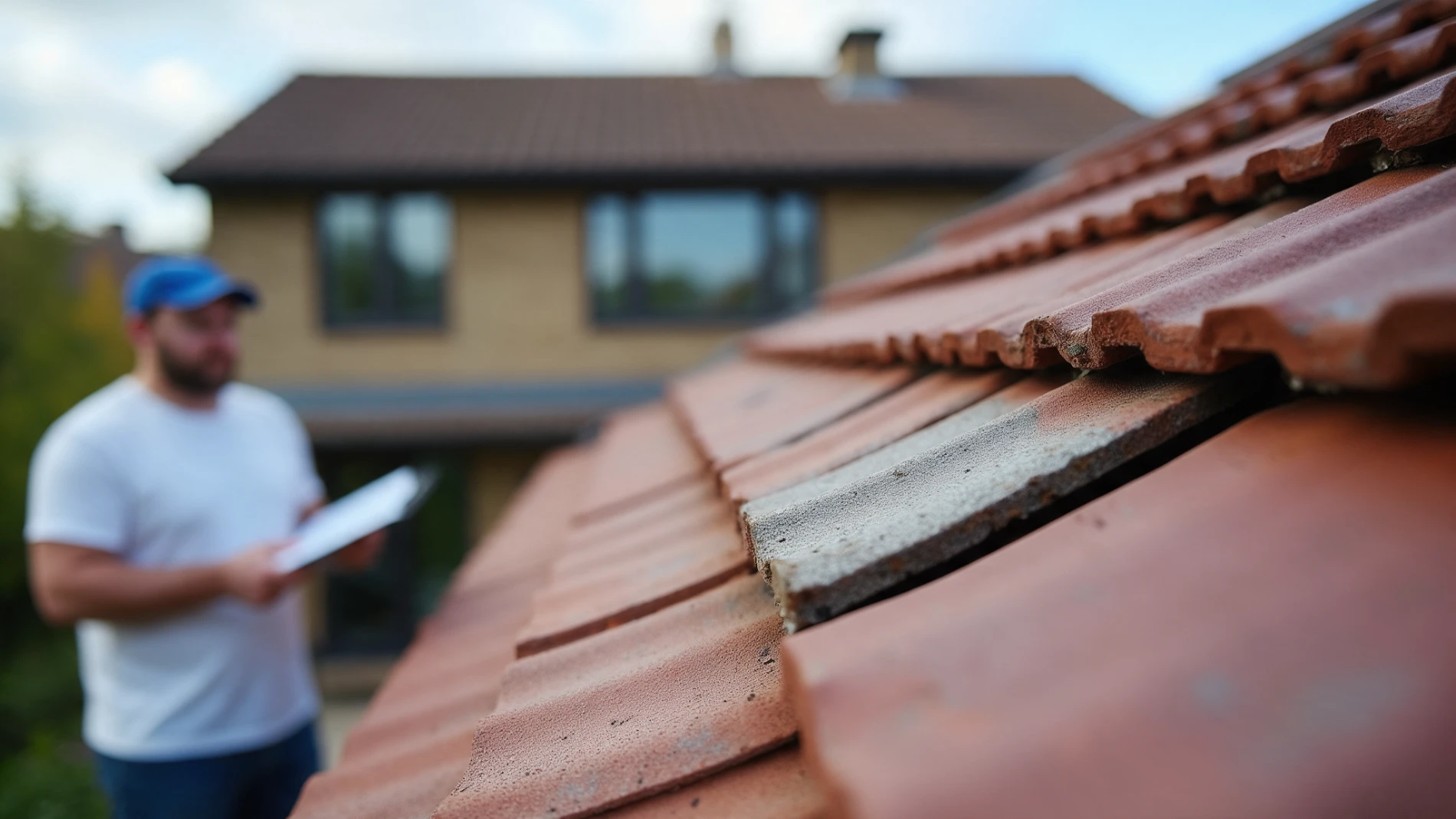
Yes. The chimney junction does not work in isolation. Broken, slipped or cracked tiles around the chimney can create additional routes for rainwater.
A tiled roof repair may therefore be required alongside work to the chimney junction. If only one part of the problem is addressed, water may continue entering through another nearby defect.
It is also worth considering how the roof responds to wind. Older tiles can become loose over time, while previous repairs may have changed how water drains around the chimney.
A careful inspection should establish whether the issue is limited to one defective component or whether several parts of the junction need attention.
What Type of Roof Do You Have?
Please select the roof type of your property. This helps us determine the best installation method and equipment for your home.
Flat Roof
Pitched Roof
It just takes 60 Sec
And then you can book a free consultation
What are the warning signs of a chimney junction problem?
Some signs are easy to notice, while others are much more subtle.
Look out for:
- Damp patches on ceilings near the chimney
- Water staining that appears after heavy rain
- Crumbling or damaged mortar
- Loose flashing
- Missing or cracked tiles near the chimney
- Damp smells in the loft
- Darkened timber around the chimney area
- Repeated leaks despite previous repairs
One particularly useful clue is recurrence. If a roof appears to have been repaired but the same area becomes damp again after subsequent rainfall, the original source may not have been fully resolved.
How should a chimney leak be investigated?
A proper investigation should consider the entire junction rather than focusing on the first visible defect.
A roofer may assess:
- The condition and positioning of the flashing
- The tiles surrounding the chimney
- Mortar joints and chimney masonry
- Underlay and roof timbers where accessible
- Signs of previous repairs
- Evidence of water tracking
- The condition of nearby roof areas
The aim is to identify the route water is taking and determine which components need attention.
A second important consideration is the condition of the surrounding roof. If tiles have reached the end of their useful life or the underlay has deteriorated, repairing one small section may not provide the most appropriate long-term solution.
When is chimney flashing repair enough?
A localised repair may be appropriate when the underlying roof and chimney structure remain in good condition and the fault is clearly confined to the flashing.
For example, replacing damaged flashing and securing the surrounding area may resolve the issue where the tiles, underlay and roof structure are otherwise sound.
However, chimney flashing repair may need to form part of a wider repair where there is evidence of:
- Multiple damaged tiles
- Deteriorated mortar
- Failed previous repairs
- Damaged underlay
- Timber deterioration
- Persistent water ingress
The correct solution depends on what the inspection reveals rather than simply how large the visible defect appears.
Why can repeated repairs become a concern?
A roof junction that repeatedly leaks deserves closer investigation. Continually repairing the same visible area without understanding why the failure keeps occurring can result in recurring costs and ongoing disruption.
For example, if a flashing repair is completed but damaged tiles continue allowing water into the same area, the problem may return. Similarly, if water has already reached the roof structure, addressing only the external entry point may leave hidden damage unresolved.
A lasting solution should consider both the immediate defect and the condition of the surrounding materials.
This does not necessarily mean a complete roof replacement is required. In many cases, targeted work can restore the junction effectively. The key is establishing the actual cause first.
What should homeowners do after discovering a chimney leak?
The safest approach is to avoid delaying an assessment, particularly where signs of active water ingress are present.
Homeowners can:
- Check the loft for visible dampness where it is safe to do so
- Note when the leak appears, especially after heavy rain
- Avoid disturbing loose tiles or flashing
- Record visible staining or water marks
- Arrange an inspection if the problem persists
Early attention can make it easier to identify the source before moisture affects a larger area.
A tiled roof repair can often be more straightforward when the problem is identified before water has caused significant secondary damage.
A typical Worthing property example
Consider a typical older property in Worthing with a pitched tiled roof and masonry chimney. The homeowner notices a small damp mark on the ceiling following periods of heavy rain. From outside, the roof looks generally sound, so the issue initially appears minor.
During an inspection, the roofer finds deteriorated flashing combined with a cracked tile close to the chimney. Water has been entering through the junction and travelling beneath the tiles before reaching the ceiling below.
In this situation, addressing both defects is more appropriate than simply sealing the visible flashing gap. If moisture has affected nearby materials, these can also be assessed before the repair is completed.
Why is a proper diagnosis important before repairing a chimney junction?
Because the visible symptom is not always the source of the problem.
A leaking chimney junction can involve several interconnected components, and water can move through a roof in unexpected ways. An accurate diagnosis helps determine whether the appropriate response is a local repair, several linked repairs or more extensive work.
For homeowners, this provides a clearer understanding of what needs doing and why.
Conclusion
Chimney junctions deserve particular attention because several roof components meet in one exposed area. A small defect in flashing, mortar or tiles can allow water to travel beneath the roof covering and potentially cause damage that is difficult to see from inside the property.
The best approach is to identify the source rather than repeatedly treating the visible symptom. With a careful inspection and the right repair strategy, many chimney-related roof problems can be addressed without unnecessary work.
If you need professional guidance, the All Roofing Works team can assess the condition of your roof and explain the most appropriate next steps for your property in Worthing.
Related articles

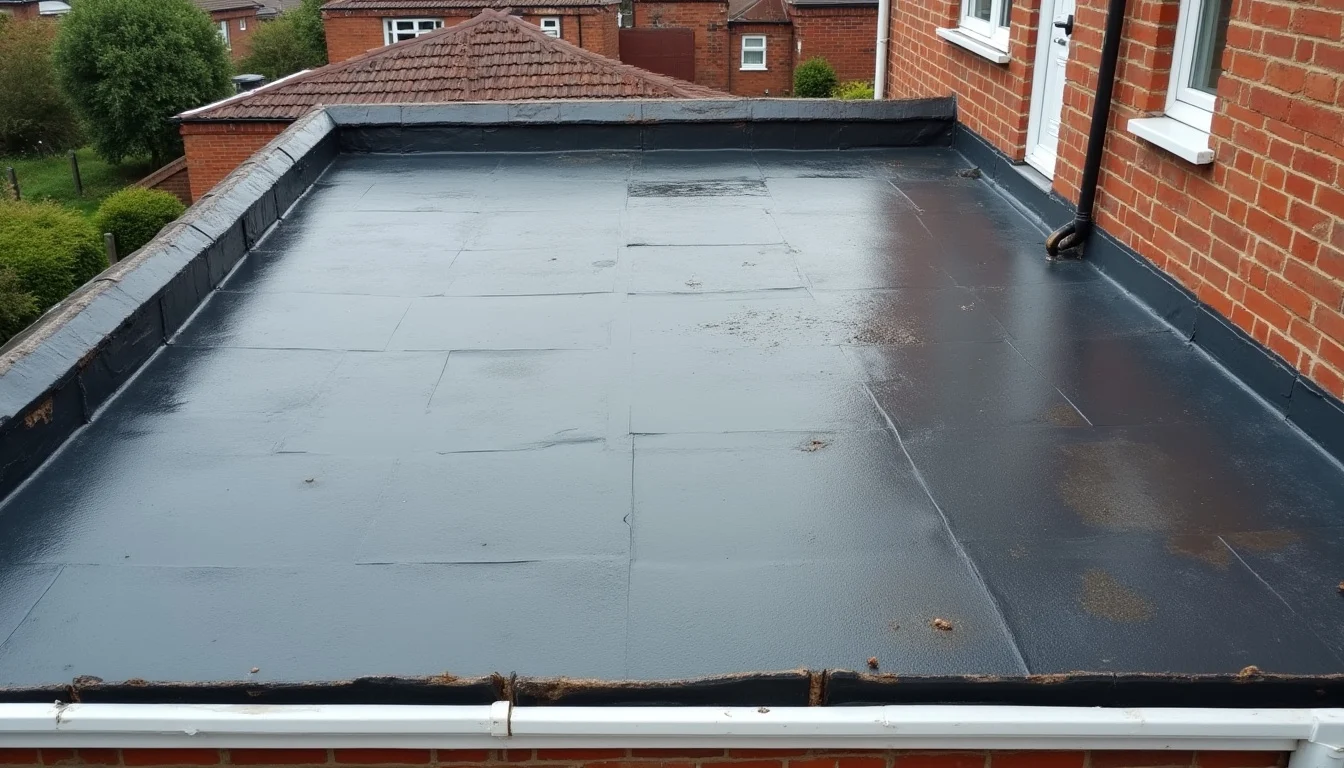
What Type of Roof Do You Have?
Please select the roof type of your property. This helps us determine the best installation method and equipment for your home.
Flat Roof
Pitched Roof
Commercial Roof
At a glance
This guide explains how flashing failures and worn joints let moisture in unseen, and what to look for before a small defect becomes a costly repair.
Introduction
A chimney can be one of the most vulnerable points on a tiled roof. Where the chimney meets the roof covering, several different materials and junctions have to work together to keep rainwater out. When one part begins to fail, water can travel beneath the tiles and cause damage that is not immediately visible from inside the property.
This is why a small-looking issue around a chimney should not automatically be treated as a simple cosmetic repair. Understanding how chimney junctions work, what commonly goes wrong and how damage develops can help Worthing homeowners make better decisions about maintenance and repairs.
Why are chimney junctions particularly vulnerable?
The junction between a chimney and tiled roof has to deal with constant exposure to rain, wind and temperature changes. It also brings together masonry, tiles, flashing and, in some cases, mortar joints or sealants.
Common problems include:
- Deteriorated or poorly installed flashing
- Cracked mortar around the chimney
- Loose or broken roof tiles
- Gaps developing at junctions
- Water tracking beneath flashing
- Damaged underlay around the chimney area
- Previous repairs that have failed or deteriorated
The important point is that water does not always appear directly below the area where it enters. It can travel along roof timbers, underlay or other materials before eventually becoming visible inside the property.
This means a damp patch on a ceiling may be several feet away from the original point of water entry.
What happens when chimney flashing starts to fail?
Flashing is designed to form a weather-resistant junction between the chimney and the roof. If it becomes loose, cracked, corroded or incorrectly fitted, rainwater can begin finding its way underneath.
A small gap may not cause obvious problems during every rainfall. However, repeated exposure can gradually saturate surrounding materials.
A professional chimney flashing repair should therefore look beyond the flashing itself. The condition of the surrounding tiles, mortar, underlay and roof structure can all influence whether the repair is likely to last.
Simply applying sealant over an obvious gap may provide temporary protection, but it may not address movement, deterioration or poor detailing that caused the problem in the first place.
What hidden damage can develop beneath the tiles?
Water entering around a chimney may remain concealed for some time. By the time a homeowner notices an interior stain, the affected area can be considerably larger than expected.
Potential consequences include:
|
Hidden problem |
What can happen |
|
Wet underlay |
Water can spread beneath surrounding tiles |
|
Damp timbers |
Persistent moisture may affect roof battens or rafters |
|
Damaged insulation |
Wet insulation may become less effective |
|
Timber deterioration |
Long-term moisture can contribute to decay |
|
Interior staining |
Ceilings and walls may show marks or discolouration |
|
Mould growth |
Persistent damp conditions can create suitable conditions for mould |
Not every chimney leak will result in all of these problems. The severity depends on how long water has been entering, the amount of moisture involved and how quickly the underlying issue is identified.
This is why an inspection can be more useful than judging the problem purely from what can be seen from ground level.
Can damaged tiles make a chimney leak worse?
Yes. The chimney junction does not work in isolation. Broken, slipped or cracked tiles around the chimney can create additional routes for rainwater.
A tiled roof repair may therefore be required alongside work to the chimney junction. If only one part of the problem is addressed, water may continue entering through another nearby defect.
It is also worth considering how the roof responds to wind. Older tiles can become loose over time, while previous repairs may have changed how water drains around the chimney.
A careful inspection should establish whether the issue is limited to one defective component or whether several parts of the junction need attention.
What Type of Roof Do You Have?
Please select the roof type of your property. This helps us determine the best installation method and equipment for your home.
Flat Roof
Pitched Roof
It just takes 60 Sec
And then you can book a free consultation
What are the warning signs of a chimney junction problem?
Some signs are easy to notice, while others are much more subtle.
Look out for:
- Damp patches on ceilings near the chimney
- Water staining that appears after heavy rain
- Crumbling or damaged mortar
- Loose flashing
- Missing or cracked tiles near the chimney
- Damp smells in the loft
- Darkened timber around the chimney area
- Repeated leaks despite previous repairs
One particularly useful clue is recurrence. If a roof appears to have been repaired but the same area becomes damp again after subsequent rainfall, the original source may not have been fully resolved.
How should a chimney leak be investigated?
A proper investigation should consider the entire junction rather than focusing on the first visible defect.
A roofer may assess:
- The condition and positioning of the flashing
- The tiles surrounding the chimney
- Mortar joints and chimney masonry
- Underlay and roof timbers where accessible
- Signs of previous repairs
- Evidence of water tracking
- The condition of nearby roof areas
The aim is to identify the route water is taking and determine which components need attention.
A second important consideration is the condition of the surrounding roof. If tiles have reached the end of their useful life or the underlay has deteriorated, repairing one small section may not provide the most appropriate long-term solution.
When is chimney flashing repair enough?
A localised repair may be appropriate when the underlying roof and chimney structure remain in good condition and the fault is clearly confined to the flashing.
For example, replacing damaged flashing and securing the surrounding area may resolve the issue where the tiles, underlay and roof structure are otherwise sound.
However, chimney flashing repair may need to form part of a wider repair where there is evidence of:
- Multiple damaged tiles
- Deteriorated mortar
- Failed previous repairs
- Damaged underlay
- Timber deterioration
- Persistent water ingress
The correct solution depends on what the inspection reveals rather than simply how large the visible defect appears.
Why can repeated repairs become a concern?
A roof junction that repeatedly leaks deserves closer investigation. Continually repairing the same visible area without understanding why the failure keeps occurring can result in recurring costs and ongoing disruption.
For example, if a flashing repair is completed but damaged tiles continue allowing water into the same area, the problem may return. Similarly, if water has already reached the roof structure, addressing only the external entry point may leave hidden damage unresolved.
A lasting solution should consider both the immediate defect and the condition of the surrounding materials.
This does not necessarily mean a complete roof replacement is required. In many cases, targeted work can restore the junction effectively. The key is establishing the actual cause first.
What should homeowners do after discovering a chimney leak?
The safest approach is to avoid delaying an assessment, particularly where signs of active water ingress are present.
Homeowners can:
- Check the loft for visible dampness where it is safe to do so
- Note when the leak appears, especially after heavy rain
- Avoid disturbing loose tiles or flashing
- Record visible staining or water marks
- Arrange an inspection if the problem persists
Early attention can make it easier to identify the source before moisture affects a larger area.
A tiled roof repair can often be more straightforward when the problem is identified before water has caused significant secondary damage.
A typical Worthing property example
Consider a typical older property in Worthing with a pitched tiled roof and masonry chimney. The homeowner notices a small damp mark on the ceiling following periods of heavy rain. From outside, the roof looks generally sound, so the issue initially appears minor.
During an inspection, the roofer finds deteriorated flashing combined with a cracked tile close to the chimney. Water has been entering through the junction and travelling beneath the tiles before reaching the ceiling below.
In this situation, addressing both defects is more appropriate than simply sealing the visible flashing gap. If moisture has affected nearby materials, these can also be assessed before the repair is completed.
Why is a proper diagnosis important before repairing a chimney junction?
Because the visible symptom is not always the source of the problem.
A leaking chimney junction can involve several interconnected components, and water can move through a roof in unexpected ways. An accurate diagnosis helps determine whether the appropriate response is a local repair, several linked repairs or more extensive work.
For homeowners, this provides a clearer understanding of what needs doing and why.
Conclusion
Chimney junctions deserve particular attention because several roof components meet in one exposed area. A small defect in flashing, mortar or tiles can allow water to travel beneath the roof covering and potentially cause damage that is difficult to see from inside the property.
The best approach is to identify the source rather than repeatedly treating the visible symptom. With a careful inspection and the right repair strategy, many chimney-related roof problems can be addressed without unnecessary work.
If you need professional guidance, the All Roofing Works team can assess the condition of your roof and explain the most appropriate next steps for your property in Worthing.
Related articles
What Type of Roof Do You Have?
Please select the roof type of your property. This helps us determine the best installation method and equipment for your home.
Flat Roof
Pitched Roof
Commercial Roof