What Storm Damage Can Reveal About an Ageing Felt Roof in Worthing
A spell of strong wind and heavy rain can make a roofing problem seem sudden. One day the roof appears to be doing its job, then a storm passes through and a damp patch, lifted section of felt or leak becomes noticeable.

Why you can trust our content
We understand that the roofing industry can be confusing, with plenty of outdated or misleading information. That’s why we rely only on trusted, proven sources to guide our advice and installations:







At a glance
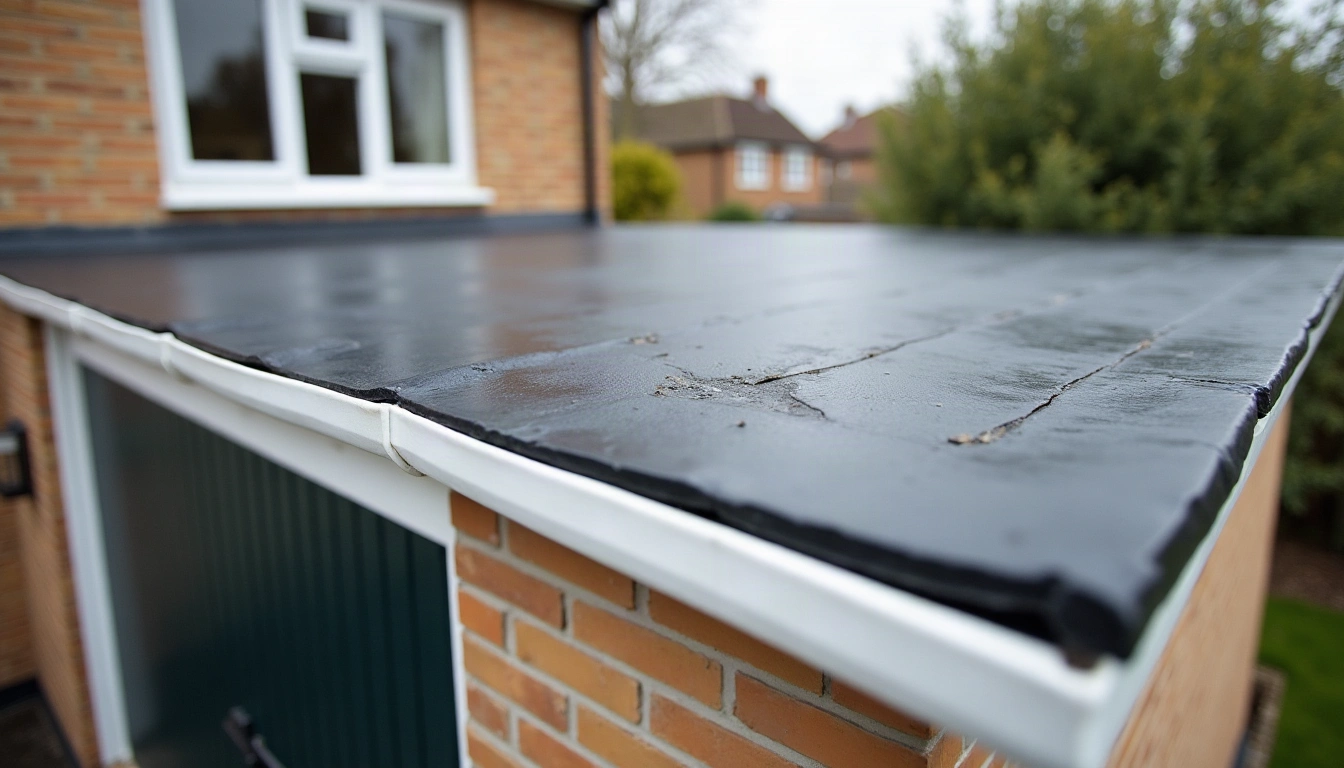
However, bad weather does not always create the whole problem from scratch. On an older felt roof, a storm can expose weaknesses that have been developing gradually for months or even years. Ageing joints, brittle material, trapped moisture and deteriorating edges may remain unnoticed until harsher weather puts the roof under additional strain.
Understanding the difference between new storm damage and an existing weakness is important because it affects the type of repair that is likely to last.
Why can a storm expose hidden weaknesses in felt roofing?
Roofing felt is designed to provide a weather-resistant barrier, but like any roofing material, its condition changes over time.
Traditional bituminous felt roofs can gradually become less flexible as they age. Repeated exposure to sunlight, temperature changes, rain and general movement in the roof structure can place stress on seams, edges and surface layers.
A strong storm can then act as the event that makes an existing weakness visible.
For example:
- A slightly loose edge may be lifted further by strong winds
- A worn joint may begin allowing water through during prolonged rain
- A small crack can widen as the material moves
- Existing blistering may split
- Poor drainage can result in water sitting on an already weakened surface
- Previous temporary repairs may begin to fail
The storm may therefore be part of the problem without necessarily being the original cause.
What should you look for after severe weather?
Some roofing problems are obvious from ground level, while others only become apparent once water reaches the inside of the property.
After a storm, homeowners can keep an eye out for several warning signs.
Outside the property
Where visible safely from ground level, look for:
- Sections of felt that appear raised or loose
- Torn or visibly damaged edges
- Cracked surface areas
- Open joints or seams
- Unusual sagging
- Debris sitting on the roof
- Water remaining on the surface
- Damage around roof edges or adjoining walls
What Type of Roof Do You Have?
Please select the roof type of your property. This helps us determine the best installation method and equipment for your home.
Flat Roof
Pitched Roof
It just takes 60 Sec
And then you can book a free consultation
Inside the property
Possible signs of water ingress include:
- New ceiling stains
- Damp patches
- Peeling paint
- Moisture around roof timbers
- A musty smell
- Dripping during heavy rainfall
- Damp insulation
- Previously dry areas becoming wet
Not every mark means the roof covering itself has failed. Water can travel, so the location of an internal stain may be different from the actual entry point.
That is why an inspection is often more useful than making assumptions from the position of the damp patch alone.
Did the storm cause the damage or reveal an existing problem?
This is one of the most useful questions to ask.
A relatively new and well-maintained roof can still suffer genuine storm damage. Strong winds may lift vulnerable edges, flying debris can cause physical damage, and unusually heavy rainfall may expose an unforeseen weakness.
With an ageing roof, however, the picture can be different.
Imagine a felt joint that has gradually started to separate. During ordinary rainfall, very little water may penetrate. A period of wind-driven rain can push water into the joint more aggressively and suddenly create a visible leak.
The homeowner understandably associates the problem with the storm, but the underlying deterioration may have been present beforehand.
A professional assessment for storm damage roof repair should therefore consider both the immediate damage and the overall condition of the roof.
The aim is not simply to identify what happened during one night of bad weather. It is to establish whether repairing that specific area will provide a lasting solution.
Common signs and what they may indicate
Different symptoms can point towards different roofing issues.
| What you notice | What it could indicate | What should be checked |
| Lifted felt edge | Wind has caught an insecure or deteriorated edge | Fixings, adhesion and surrounding felt |
| Cracked surface | Ageing, movement or weather exposure | Extent and depth of cracking |
| Blistering | Moisture or air trapped beneath layers | Condition beneath the affected area |
| Open seam | Joint deterioration or movement | Adjacent seams and underlying deck |
| Water pooling | Poor falls, blocked outlets or local deformation | Drainage and roof surface |
| Interior damp patch | Water ingress somewhere above | Full route of water entry |
| Failed old patch | Temporary repair has deteriorated | Original defect beneath the patch |
| Multiple damaged areas | Wider ageing of the roof covering | Overall serviceable condition |
The important point is that the visible symptom is only part of the diagnosis.
For example, replacing one loose piece of felt might solve a genuinely localised issue. If several seams are opening and the surrounding material has become brittle, repeated small repairs may offer diminishing value.
How does the age of a felt roof affect repair decisions?
Age alone does not decide whether a roof should be repaired or replaced.
Two roofs of a similar age can be in very different condition depending on the original installation, roof design, maintenance, exposure and drainage.
Instead, the decision should be based on factors such as:
- Whether the damage is concentrated in one area
- How flexible and sound the surrounding felt remains
- Whether seams are still secure
- The condition of the roof deck beneath
- Whether leaks have occurred previously
- How many repairs have already been completed
- Whether water drains effectively from the surface
- Whether the roof is showing deterioration across several areas
A local repair can make good sense when the wider roof remains serviceable.
The situation changes when one repair simply moves the problem to the next weakest area. In that case, continuing to patch individual defects may become less practical than considering more extensive work.
When is repairing an ageing felt roof still worthwhile?
A repair can still be entirely appropriate on an older roof.
If an inspection finds one isolated split, a damaged edge or a localised joint failure while the surrounding roof remains sound, targeted work may restore weather protection without unnecessary replacement.
When considering felt roof repair Worthing, the quality of the remaining roof covering matters just as much as the visible damaged section.
A good repair should integrate properly with the existing roof rather than simply covering the affected area.
That may involve:
- Identifying the source of water ingress
- Checking the condition of the surrounding material
- Removing loose or failed material where appropriate
- Preparing the area correctly
- Completing a compatible repair
- Checking nearby joints and drainage
- Confirming that water can move away from the repaired area
This more considered approach can reduce the likelihood of treating the same symptom repeatedly.
Why are temporary patches not always a long-term solution?
Emergency measures can be useful when immediate water ingress needs to be controlled, particularly when weather conditions make a permanent repair impractical.
The problem comes when a temporary patch becomes the only response to a roof that is deteriorating more widely.
A patch may eventually fail if:
- It has been applied over damp or unstable material
- The original split continues underneath
- Surrounding felt is deteriorating
- Water is entering from a different point
- Movement opens the joint again
- Drainage problems remain unresolved
Several old patches across the same roof can also be a useful clue. They may suggest that the roof has been experiencing recurring weaknesses rather than one isolated incident.
This does not automatically mean replacement is required. It does mean the wider condition deserves closer attention before another patch is added.
What should a professional felt roof inspection cover?
An effective assessment should look beyond the most obvious damaged section.
Depending on accessibility and roof construction, a roofer may examine:
- Felt seams and laps
- Roof edges
- Upstands
- Junctions with walls
- Flashings
- Drainage outlets
- Areas of ponding
- Previous repairs
- Surface cracking
- Blistering
- Visible movement or sagging
- The roof deck where its condition can be assessed
Inside the property, signs of damp can also help narrow down the likely path of water.
This broader inspection helps separate a straightforward local repair from a roof that may have several connected problems.
(Link to related blog: Why Roof Leaks Around Chimneys Need a Different Repair Approach in Worthing)
How quickly should storm-related roof damage be addressed?
If water is actively entering the property, arranging an assessment promptly is sensible.
Continuing water ingress can affect more than the roof covering. Depending on where moisture travels, it may reach insulation, ceilings, decorative finishes and timber.
Even when no internal leak is visible, a lifted section of roofing material should not necessarily be ignored. Further wind or rain could make the opening larger.
Homeowners should avoid climbing onto a wet or storm-damaged roof themselves. Flat roofs can still be slippery, fragile or unsafe, particularly where the condition of the underlying deck is unknown.
Photographs taken safely from ground level can be useful, but closer inspection is best left to somebody with the appropriate access equipment and roofing experience.
Look beyond the immediate storm damage
Bad weather can reveal useful information about the condition of a roof.
A lifted edge or sudden leak may be a genuinely isolated weather-related problem, but it can also expose deterioration that has been developing gradually. The difference matters because a successful repair needs to address the actual weakness rather than only the most visible symptom.
For homeowners considering felt roof repair in Worthing, an assessment of the surrounding roof can help establish whether a targeted repair is appropriate or whether wider deterioration needs attention.
All Roofing Works supports homeowners across Worthing and the surrounding parts of West Sussex with roof inspections and repair work. Our approach is to understand what has caused the problem first, then recommend work that is proportionate to the condition of the roof.
Related articles

What Type of Roof Do You Have?
Please select the roof type of your property. This helps us determine the best installation method and equipment for your home.
Flat Roof
Pitched Roof
Commercial Roof
At a glance
However, bad weather does not always create the whole problem from scratch. On an older felt roof, a storm can expose weaknesses that have been developing gradually for months or even years. Ageing joints, brittle material, trapped moisture and deteriorating edges may remain unnoticed until harsher weather puts the roof under additional strain.
Understanding the difference between new storm damage and an existing weakness is important because it affects the type of repair that is likely to last.
Why can a storm expose hidden weaknesses in felt roofing?
Roofing felt is designed to provide a weather-resistant barrier, but like any roofing material, its condition changes over time.
Traditional bituminous felt roofs can gradually become less flexible as they age. Repeated exposure to sunlight, temperature changes, rain and general movement in the roof structure can place stress on seams, edges and surface layers.
A strong storm can then act as the event that makes an existing weakness visible.
For example:
- A slightly loose edge may be lifted further by strong winds
- A worn joint may begin allowing water through during prolonged rain
- A small crack can widen as the material moves
- Existing blistering may split
- Poor drainage can result in water sitting on an already weakened surface
- Previous temporary repairs may begin to fail
The storm may therefore be part of the problem without necessarily being the original cause.
What should you look for after severe weather?
Some roofing problems are obvious from ground level, while others only become apparent once water reaches the inside of the property.
After a storm, homeowners can keep an eye out for several warning signs.
Outside the property
Where visible safely from ground level, look for:
- Sections of felt that appear raised or loose
- Torn or visibly damaged edges
- Cracked surface areas
- Open joints or seams
- Unusual sagging
- Debris sitting on the roof
- Water remaining on the surface
- Damage around roof edges or adjoining walls
What Type of Roof Do You Have?
Please select the roof type of your property. This helps us determine the best installation method and equipment for your home.
Flat Roof
Pitched Roof
It just takes 60 Sec
And then you can book a free consultation
Inside the property
Possible signs of water ingress include:
- New ceiling stains
- Damp patches
- Peeling paint
- Moisture around roof timbers
- A musty smell
- Dripping during heavy rainfall
- Damp insulation
- Previously dry areas becoming wet
Not every mark means the roof covering itself has failed. Water can travel, so the location of an internal stain may be different from the actual entry point.
That is why an inspection is often more useful than making assumptions from the position of the damp patch alone.
Did the storm cause the damage or reveal an existing problem?
This is one of the most useful questions to ask.
A relatively new and well-maintained roof can still suffer genuine storm damage. Strong winds may lift vulnerable edges, flying debris can cause physical damage, and unusually heavy rainfall may expose an unforeseen weakness.
With an ageing roof, however, the picture can be different.
Imagine a felt joint that has gradually started to separate. During ordinary rainfall, very little water may penetrate. A period of wind-driven rain can push water into the joint more aggressively and suddenly create a visible leak.
The homeowner understandably associates the problem with the storm, but the underlying deterioration may have been present beforehand.
A professional assessment for storm damage roof repair should therefore consider both the immediate damage and the overall condition of the roof.
The aim is not simply to identify what happened during one night of bad weather. It is to establish whether repairing that specific area will provide a lasting solution.
Common signs and what they may indicate
Different symptoms can point towards different roofing issues.
| What you notice | What it could indicate | What should be checked |
| Lifted felt edge | Wind has caught an insecure or deteriorated edge | Fixings, adhesion and surrounding felt |
| Cracked surface | Ageing, movement or weather exposure | Extent and depth of cracking |
| Blistering | Moisture or air trapped beneath layers | Condition beneath the affected area |
| Open seam | Joint deterioration or movement | Adjacent seams and underlying deck |
| Water pooling | Poor falls, blocked outlets or local deformation | Drainage and roof surface |
| Interior damp patch | Water ingress somewhere above | Full route of water entry |
| Failed old patch | Temporary repair has deteriorated | Original defect beneath the patch |
| Multiple damaged areas | Wider ageing of the roof covering | Overall serviceable condition |
The important point is that the visible symptom is only part of the diagnosis.
For example, replacing one loose piece of felt might solve a genuinely localised issue. If several seams are opening and the surrounding material has become brittle, repeated small repairs may offer diminishing value.
How does the age of a felt roof affect repair decisions?
Age alone does not decide whether a roof should be repaired or replaced.
Two roofs of a similar age can be in very different condition depending on the original installation, roof design, maintenance, exposure and drainage.
Instead, the decision should be based on factors such as:
- Whether the damage is concentrated in one area
- How flexible and sound the surrounding felt remains
- Whether seams are still secure
- The condition of the roof deck beneath
- Whether leaks have occurred previously
- How many repairs have already been completed
- Whether water drains effectively from the surface
- Whether the roof is showing deterioration across several areas
A local repair can make good sense when the wider roof remains serviceable.
The situation changes when one repair simply moves the problem to the next weakest area. In that case, continuing to patch individual defects may become less practical than considering more extensive work.
When is repairing an ageing felt roof still worthwhile?
A repair can still be entirely appropriate on an older roof.
If an inspection finds one isolated split, a damaged edge or a localised joint failure while the surrounding roof remains sound, targeted work may restore weather protection without unnecessary replacement.
When considering felt roof repair Worthing, the quality of the remaining roof covering matters just as much as the visible damaged section.
A good repair should integrate properly with the existing roof rather than simply covering the affected area.
That may involve:
- Identifying the source of water ingress
- Checking the condition of the surrounding material
- Removing loose or failed material where appropriate
- Preparing the area correctly
- Completing a compatible repair
- Checking nearby joints and drainage
- Confirming that water can move away from the repaired area
This more considered approach can reduce the likelihood of treating the same symptom repeatedly.
Why are temporary patches not always a long-term solution?
Emergency measures can be useful when immediate water ingress needs to be controlled, particularly when weather conditions make a permanent repair impractical.
The problem comes when a temporary patch becomes the only response to a roof that is deteriorating more widely.
A patch may eventually fail if:
- It has been applied over damp or unstable material
- The original split continues underneath
- Surrounding felt is deteriorating
- Water is entering from a different point
- Movement opens the joint again
- Drainage problems remain unresolved
Several old patches across the same roof can also be a useful clue. They may suggest that the roof has been experiencing recurring weaknesses rather than one isolated incident.
This does not automatically mean replacement is required. It does mean the wider condition deserves closer attention before another patch is added.
What should a professional felt roof inspection cover?
An effective assessment should look beyond the most obvious damaged section.
Depending on accessibility and roof construction, a roofer may examine:
- Felt seams and laps
- Roof edges
- Upstands
- Junctions with walls
- Flashings
- Drainage outlets
- Areas of ponding
- Previous repairs
- Surface cracking
- Blistering
- Visible movement or sagging
- The roof deck where its condition can be assessed
Inside the property, signs of damp can also help narrow down the likely path of water.
This broader inspection helps separate a straightforward local repair from a roof that may have several connected problems.
(Link to related blog: Why Roof Leaks Around Chimneys Need a Different Repair Approach in Worthing)
How quickly should storm-related roof damage be addressed?
If water is actively entering the property, arranging an assessment promptly is sensible.
Continuing water ingress can affect more than the roof covering. Depending on where moisture travels, it may reach insulation, ceilings, decorative finishes and timber.
Even when no internal leak is visible, a lifted section of roofing material should not necessarily be ignored. Further wind or rain could make the opening larger.
Homeowners should avoid climbing onto a wet or storm-damaged roof themselves. Flat roofs can still be slippery, fragile or unsafe, particularly where the condition of the underlying deck is unknown.
Photographs taken safely from ground level can be useful, but closer inspection is best left to somebody with the appropriate access equipment and roofing experience.
Look beyond the immediate storm damage
Bad weather can reveal useful information about the condition of a roof.
A lifted edge or sudden leak may be a genuinely isolated weather-related problem, but it can also expose deterioration that has been developing gradually. The difference matters because a successful repair needs to address the actual weakness rather than only the most visible symptom.
For homeowners considering felt roof repair in Worthing, an assessment of the surrounding roof can help establish whether a targeted repair is appropriate or whether wider deterioration needs attention.
All Roofing Works supports homeowners across Worthing and the surrounding parts of West Sussex with roof inspections and repair work. Our approach is to understand what has caused the problem first, then recommend work that is proportionate to the condition of the roof.
Related articles
What Type of Roof Do You Have?
Please select the roof type of your property. This helps us determine the best installation method and equipment for your home.
Flat Roof
Pitched Roof
Commercial Roof